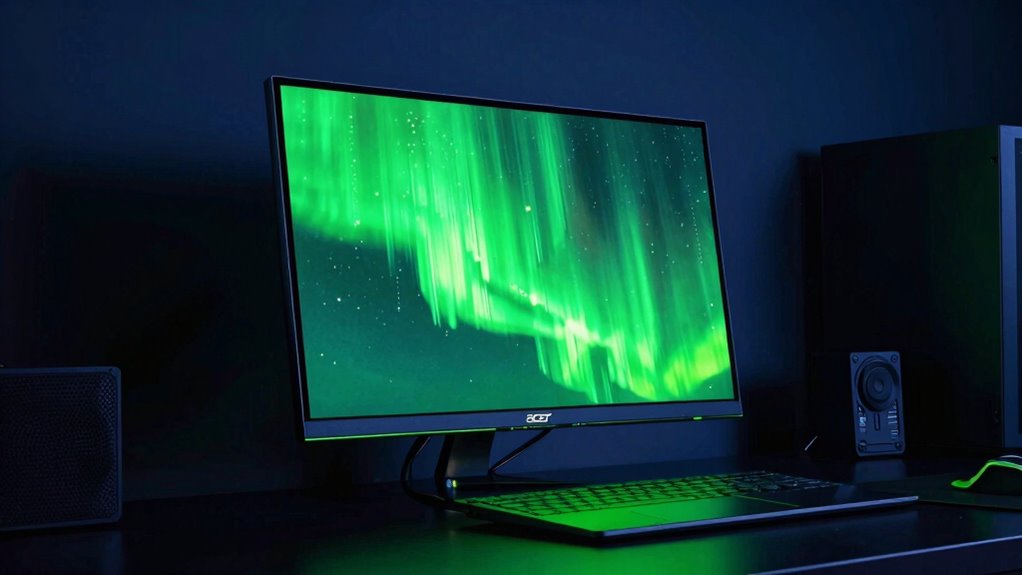
The Acer Predator X25 targets tournament readiness with a compact 24.5-inch chassis and a matte black, cable-manageable frame. It pushes up to 360 Hz on a 1080p IPS panel, delivering 0.3 ms G-to-G with G-SYNC and NVIDIA Reflex tools. Build is sturdy but visually bulky; adjustments include height, tilt, swivel, and pivot. HDR 400, 99% sRGB, and 400 nit brightness are noted, but mura and bleed are possible. Practical value hinges on price relative to performance; further details await.
Design and Build
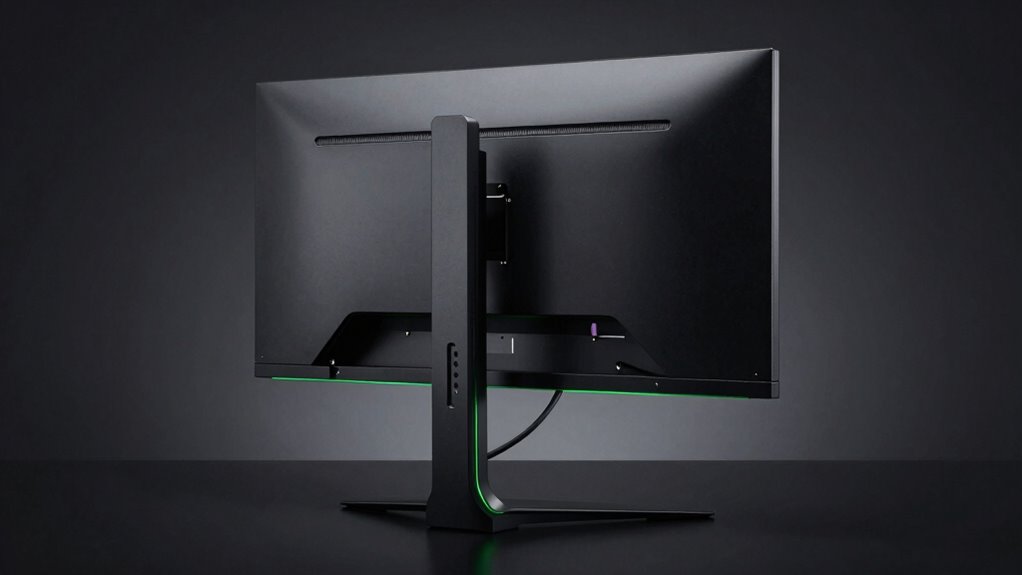
The Acer Predator X25 presents a compact, 24.5-inch chassis that prioritizes a clean, tournament-ready silhouette over flamboyant design. The frame is matte black with minimal chrome, emphasizing build solidity and cable management potential. A sturdy stand offers height, tilt, swivel, and pivot adjustments, aligning with ergonomic expectations while preserving a low-profile footprint. Edges are angular but restrained, contributing to a disciplined aesthetic. Design aesthetics emphasize function over flair, with uniform bezels and a reversible cable exit. Packaging contents appear concise and purposeful, containing essential cables alongside the monitor. Overall, construction communicates durability and modularity, free from extraneous ornament.
Display Performance and Tech
Display performance begins with a 24.5-inch Full HD IPS panel offering up to 360 Hz and a 0.3 ms G-to-G response time, providing exceptionally fast motion handling for competitive titles. The panel delivers 1920×1080 resolution with 99% sRGB coverage and 400 nit brightness, supporting DisplayHDR 400 for improved highlights. G-SYNC compatibility is noted, reducing synchronization artifacts, while NVIDIA Reflex latency tools aid evaluation of input latency.
Tech specs emphasize a slim bezel design, USB-C absence, and standard connections (DP 1.4, HDMI 2.0, USB 3.0). In practice, display performance hinges on signal integrity and color stability under load.
Gaming Features and Responsiveness
This section examines how the X25 leverages its gaming-specific features to deliver rapid, consistent responsiveness: G-SYNC maintains frame pacing to minimize tearing, while the NVIDIA Reflex Latency Analyzer provides concrete latency measurements for qualified titles and setups. The monitor’s eSports Mode and 360Hz potential are scrutinized for real-world benefit, not marketing hype. Reported inputs imply tight G to G timing with minimal ghosting, yet results vary by system configuration and title.
Gendered latency appears as a consideration in frame pacing consistency across scenes. In competitive esports contexts, the X25 demonstrates credible, not flawless, responsiveness aligned to expectations.
Connectivity and Ports
Connectivity options are enumerated with exact port types and counts, ensuring users can map use-cases to available interfaces without ambiguity.
The Acer Predator X25 provides DisplayPort 1.4, two HDMI 2.0 ports, and an audio-out jack, complemented by three USB 3.0 ports. The USB ports enable peripheral daisy-chaining and basic hub functionality, though bandwidth is limited by USB 3.0 specifications.
Cables are included for DisplayPort, HDMI, and USB connections, reducing setup ambiguity. No onboard Ethernet or Thunderbolt is present.
Value and Practical Verdict
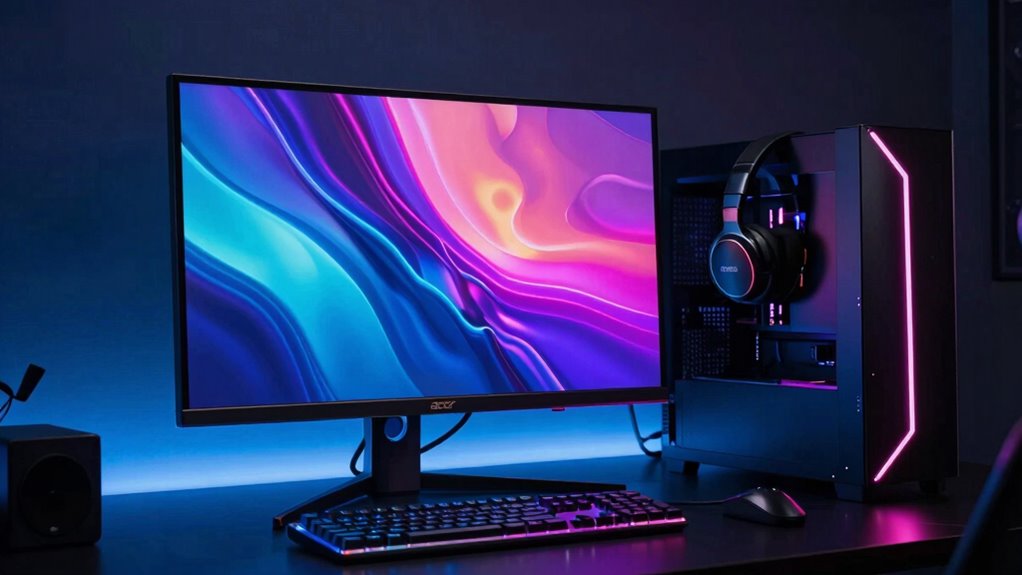
The previous discussion on connectivity sets the stage for evaluating overall value, balancing reported capabilities against cost, feature set, and practical use. The Acer Predator X25 offers high refresh potential and gaming features, but practical value hinges on price value versus performance gains. Build quality appears solid, yet the design remains bulky for a compact desk, inviting scrutiny of design flaws in daily setup and long sessions. Color accuracy and HDR71 are notable, though visible mura or backlight bleed could undermine value at higher usage. For competitive players, the price value may justify purchase; for casual users, skepticism remains warranted. Overall, disciplined budgeting remains essential.
Conclusion
The Acer Predator X25 delivers on its core premise: blistering speed and compact form, engineered with gamer-first ergonomics. Yet the package raises questions: does 360 Hz and 0.3 ms GtG translate into meaningful perceptual gains for most players, and is the cost justified beyond niche competitive use? The panel’s 24.5 inches and Full HD resolution constrain visual fidelity, even as DisplayHDR 400 and Reflex tools add measured value. In sum, a focused, high-refresh curiosity with limited broader appeal.