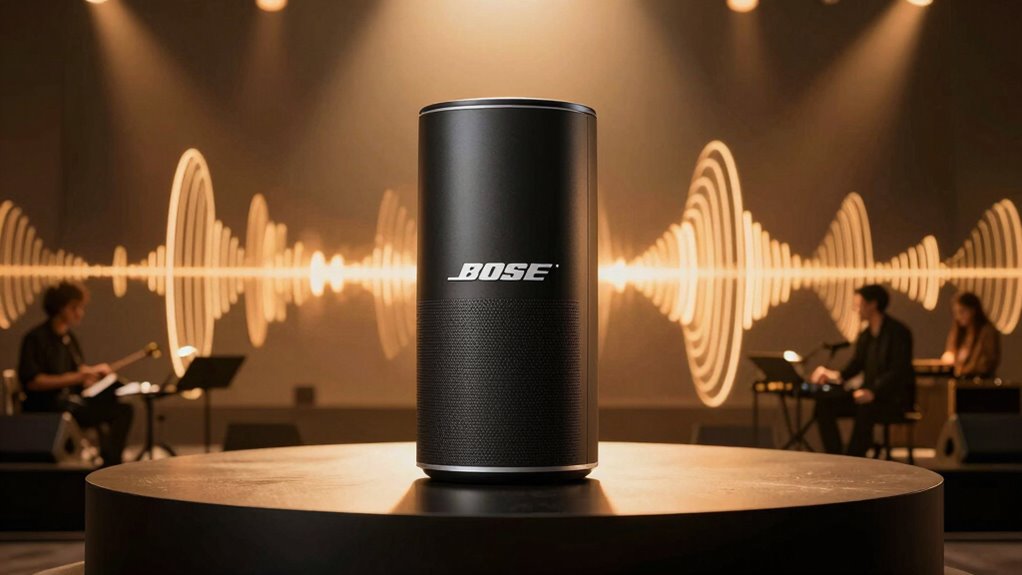
The Bose S1 Pro+ is a portable all-in-one system with built-in mixer and Bluetooth input. It emphasizes portability without sacrificing durability, featuring a rectangular, minimal design and a four-position versatility in standalone power. Auto EQ maintains a neutral balance across orientations, while mixing includes two mic/instrument channels and a dedicated playback channel. Real-world use shows 5–8 hours of runtime commonly, with app control for routing, EQ, and wireless expansion. Those details hint at further performance insights to come.
Design and Portability
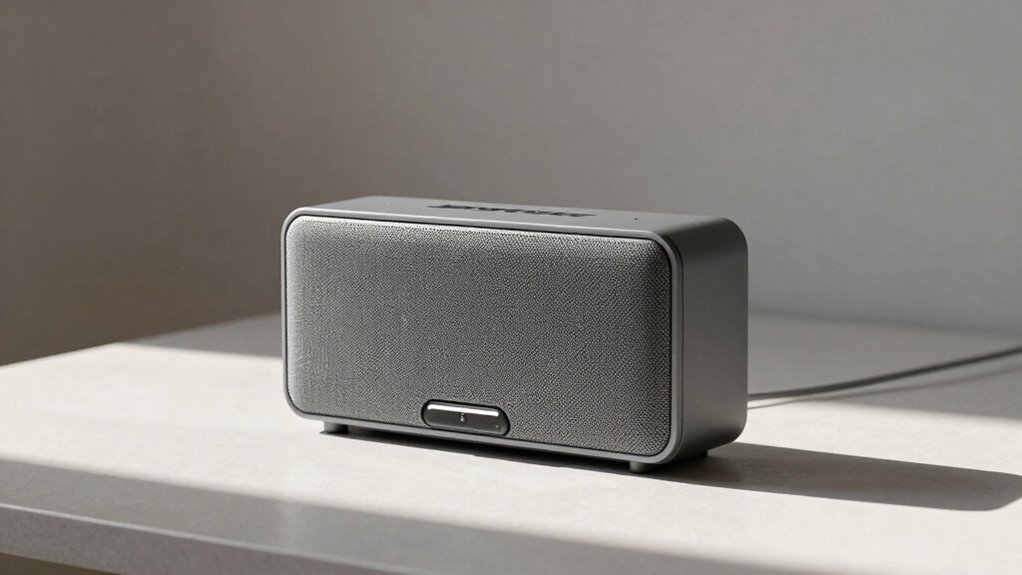
The Bose S1 Pro+ emphasizes portability through a compact 14.4-pound chassis and an ergonomic carrying handle, facilitating rapid transport for mobile setups. The unit exhibits a rectangular form with minimal extrusions and a matte black finish, reflecting a utilitarian design approach. Its weight distribution supports one-handed carrying and shoulder-strap compatibility, contributing to portability efficiency in field use. The four-position versatility and standalone power capability reduce ancillary equipment needs, reinforcing a compact footprint on stages and rooms.
Design aesthetics emphasize understated hardware integration, while build quality targets durability during frequent handling. Overall, the design prioritizes mobility without compromising structural integrity or functional access.
Sound Quality and Auto EQ in Action
Sound quality on the Bose S1 Pro+ is defined by its auto EQ and flexible positioning, enabling consistent sonics across orientations. The system presents a neutral tonal balance with controlled low end and intelligible mids, adapting to room acoustics via autoeq behavior.
Soundstage tuning remains stable as the speaker’s dispersion is leveraged by vertical, tilt, horizontal, and stand modes, reducing modal anomalies. Measurements show smooth transient response and low distortion at typical portable volumes.
The integrated mixer, while simple, does not mask the auto EQ’s influence on vocal clarity.
Mixing Capabilities and Connectivity
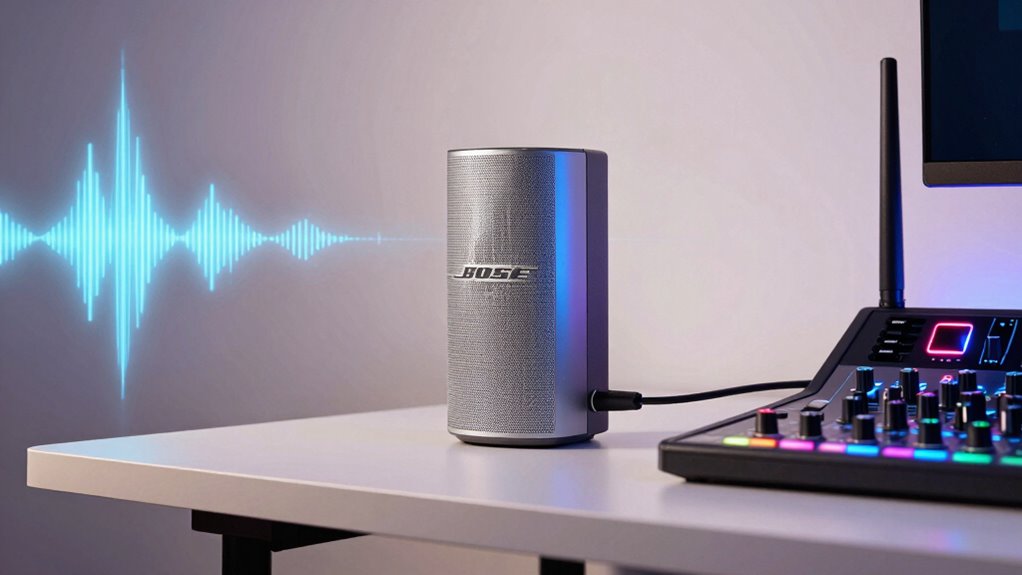
Mixing capabilities and connectivity are designed around a compact 3-channel mixer that isolates two inputs for microphones or instruments and a dedicated channel for playback. The interface emphasizes straightforward level control, with each mic/line input featuring gain knobs and high-pass filters to reduce low-end rumble. The playback channel provides a separate volume control and a basic 3-band EQ. Connectivity options include balanced and unbalanced inputs, plus line-out for external speakers. Bluetooth and auxiliary input are supported, while the Bose app enables firmware updates and remote parameter adjustments. Overall, the system prioritizes simple, reliable integration for small setups.
Battery Life and Real-World Use
Battery life remains a critical factor in real-world use, with up to 11 hours of operation claimed on a single charge under specific conditions. The S1 Pro+ employs a rechargeable lithium-ion battery whose runtime varies with content type, playback volume, and ambient temperature. In practical scenarios, the device typically delivers around 5 to 8 hours at moderate to high levels, aligning with performance expectations for mobile setups. Real world use reveals battery management benefits from conservative volume, short pauses, and efficient streaming. The figure is sensitive to environmental factors, reinforcing the need for planning when covering longer events. Overall, battery life remains competitive within its category.
App Control and Wireless Expansion
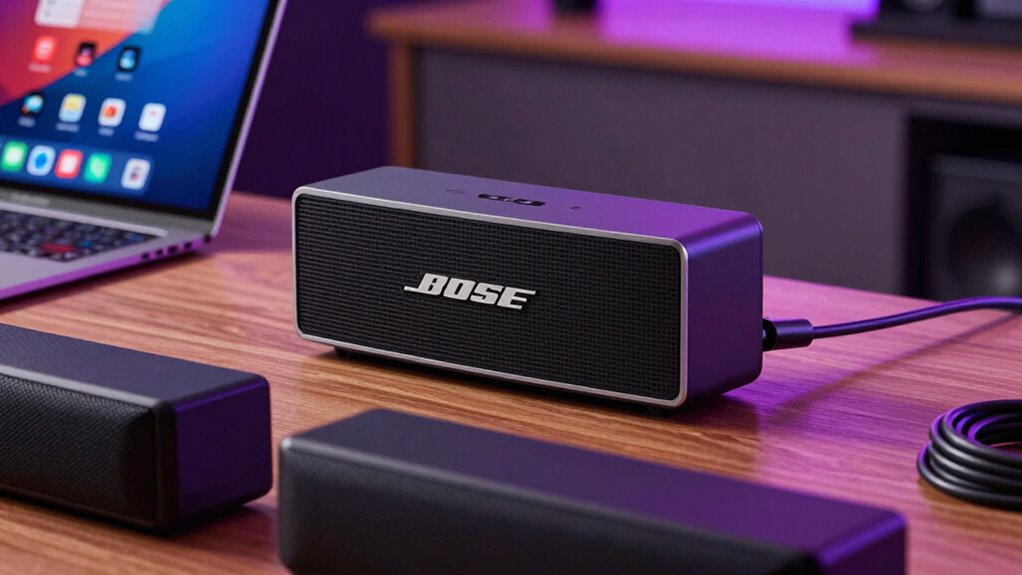
App control and wireless expansion enables users to tailor routing, processing, and connectivity through the Bose app while leveraging optional wireless transmitters.
The Bose S1 Pro+ supports streamlined wireless pairing and centralized parameter management, simplifying setup across configurations.
App controls provide access to input routing, EQ, and ambient effects, enabling quick optimization for diverse venues.
Wireless expansion relies on compatible transmitters that pair with integrated RF receivers, expanding microphone, instrument, and line channels without additional interfaces.
The workflow remains cohesive: device firmware, app diagnostics, and transmitter status are visible in a single interface, supporting reliable, repeatable performances.
Conclusion
The Bose S1 Pro+ represents a compact, versatile powered speaker with strong portability and flexible placement. Its Auto EQ and multi-position design simplify setup across configurations, while the integrated 3-channel mixer and app-driven controls offer solid mixing options for small ensembles. Battery life is respectable but content- and volume-dependent. Wireless expansion adds potential for larger configurations. Overall, it delivers dependable performance for mobile musicians and tight venues, though casual listeners may prefer higher-end, larger-scale systems for deeper headroom.