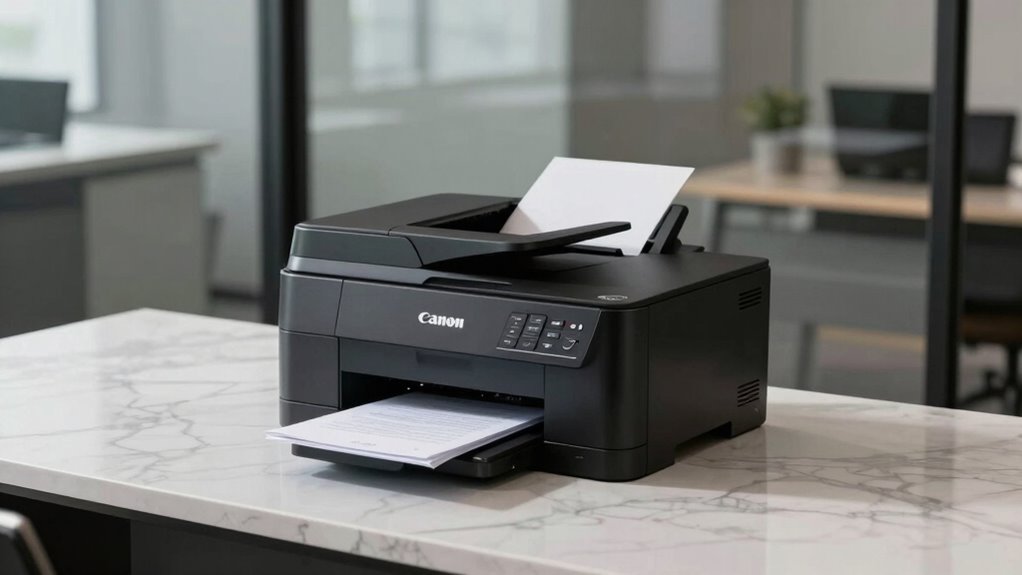
The Canon ImageClass MF753CDW presents solid color and monochrome output with respectable duplexing and expandable paper capacity. Build quality is predictable, though some flex emerges in hinges and trays with repeated use. Real-world speeds lag behind claims on mixed workloads, and color gradients can show banding at higher saturation. Connectivity is reliable on standard networks but may drop during peak periods, and app support is mixed. For a closer look, more details await beyond this summary.
Design and Build Quality
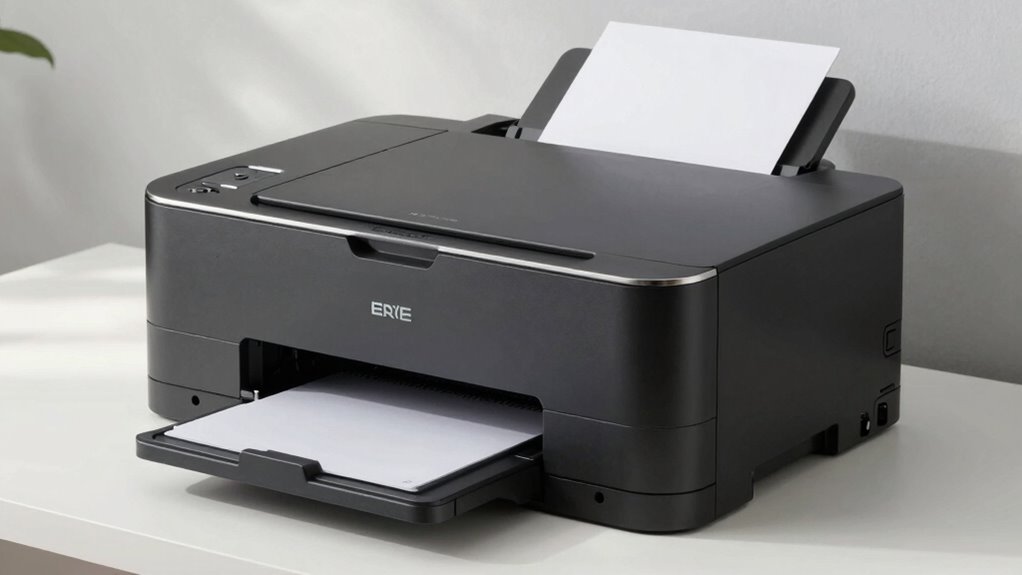
The Canon imageCLASS MF753Cdw presents a compact, boxy chassis typical of modern color laser all-in-ones, with dimensions of 18.2D x 16.8W x 17H inches that suggest a footprint suitable for small to medium offices. From a detached perspective, the design prioritizes straightforward accessibility: front-access panels align with predictable service points, and the control surface sits within ergonomic reach. Design aesthetics lean practical, not dramatic, emphasizing uniform line work and conservative color. Build durability appears adequate for office cycles, yet hinges, trays, and document feeder show modest flex under repeated opening. Overall, reliability hinges on component sourcing and long-term wear.
Printing Performance and Quality
Questioning its claimed speed, the MF753Cdw sustains up to 35 pages per minute in both monochrome and color on letter-sized stock, though real-world throughput often falls short under mixed workloads and complex graphics. Printing performance is consistent in standard text tasks, yet color graphics reveal banding at higher saturation and shallow gradients in certain media. The device produces acceptable line work and moderate image detail, with predictable dimmest tones in low-contrast scenes. design quality influences perceived speed, while color accuracy remains serviceable but not studio-class. Overall, print quality aligns with office expectations, balancing efficiency and legibility without premium photo fidelity.
Connectivity and Mobile Printing
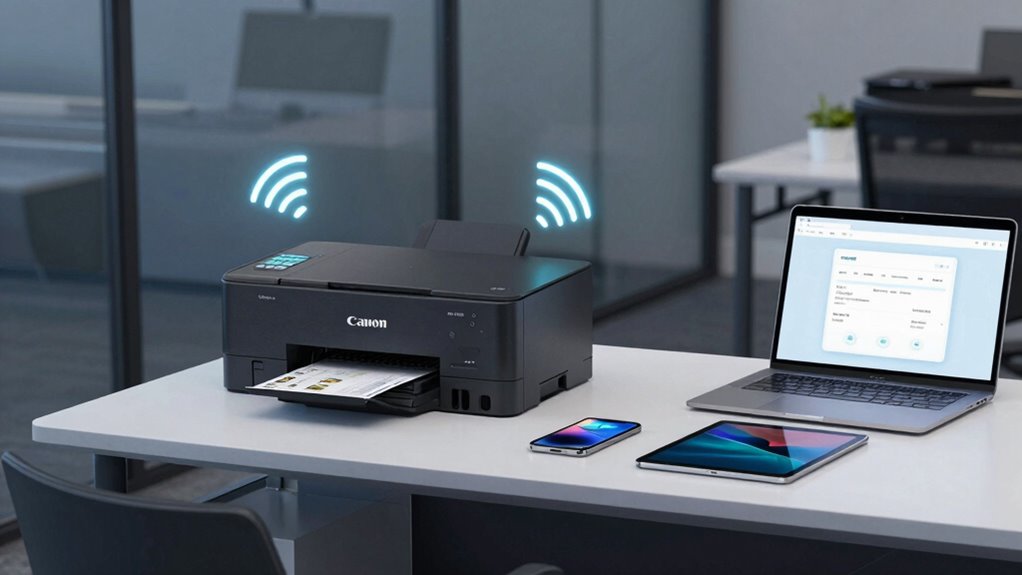
The MF753Cdw offers a suite of wireless and on-the-go options that align with its all-in-one, office-oriented design, though practical performance hinges on network conditions and device compatibility. In connectivity terms, the printer supports standard Wi-Fi, Ethernet, and USB host use, with Canon PRINT Business enabling basic mobile printing workflows. The implementation emphasizes on-network reliability rather than sekali-off setups. However, reported issues include sporadic drops during busy periods and mixed results with non-sourced apps.
Paper Handling and Input Options
With a 250-sheet standard cassette and a 50-sheet multipurpose tray, the MF753Cdw offers modest initial capacity that may necessitate frequent reloading in busy environments.
The paper handling is straightforward, with expandable capacity up to 850 sheets via optional PF-K1 cassettes, which improves long print runs but adds cost and space considerations.
Input options include the 50-sheet ADF for multitask workflows and standard plain paper support across common sizes, yet the lack of more versatile media handling (specialty stocks) is a constraint.
Value, Warranty, and Support
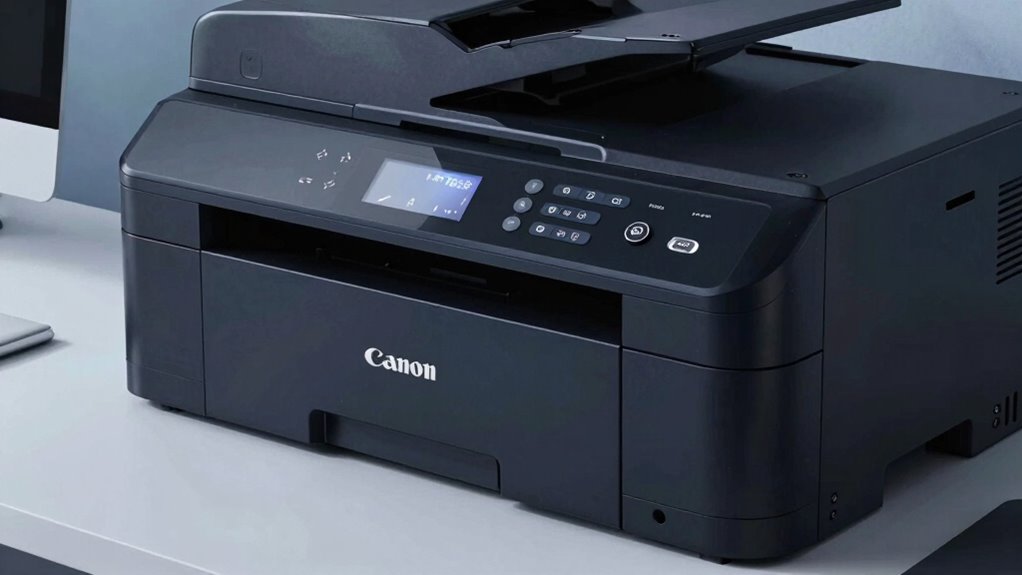
Despite modest paper handling, the MF753Cdw’s value proposition rests on its bundled warranty and ongoing support framework. The device ships with a three-year limited warranty, an attractive baseline for a midrange color laser. EU spare-part availability through year three adds some reassurance, yet regional access and service latency vary by market. Support channels are defined but not exceptional, with standard online resources and Canon backing. Two word ideas, value warranty, surface in practicality: the price-to-feature ratio remains reasonable given speed, duplexing, and expandability. Still, ongoing reliability hinges on firmware updates and timely parts supply rather than premium service contracts.
Conclusion
The Canon imageCLASS MF753Cdw delivers robust productivity with fast color output and versatile versatile features, but its strengths are offset by costliness and setup complexity typical of enterprise devices. Build quality is solid, yet the 3-year warranty offers limited protection for home users. While the device excels in office workflows, the total cost of ownership—toner, maintenance, and potential upgrade needs—warrants cautious budgeting. Overall, performance justifies investment mainly in mid-to-large office environments, not casual or budget-conscious households.