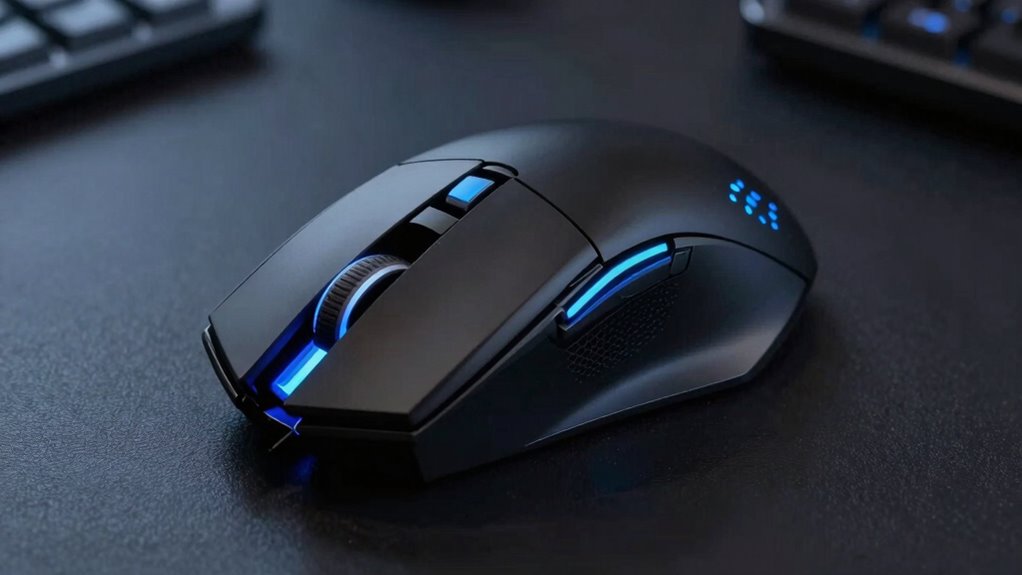
The Corsair Harpoon offers precise 6,000 DPI tracking with a compact, ergonomic silhouette designed for extended play. Its contour supports natural palm and finger placement, while textured side grips provide reliable traction. Performance stays consistent with minimal noise, though micro-stutters can occur under heavy CPU load. Six programmable buttons and onboard memory enable quick transitions between systems, but complex macros may exceed onboard capacity and some PC features may not translate to consoles. Learn what else impacts its competitive appeal.
Design and Ergonomics
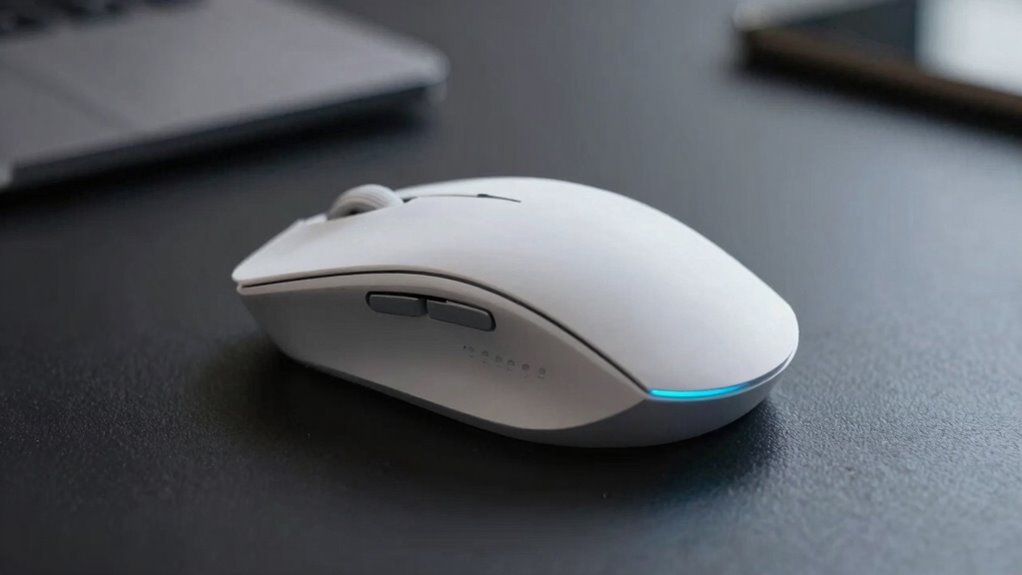
The Corsair Harpoon’s design emphasizes a compact, ergonomic silhouette that aligns with a wider preference for comfort during extended play sessions.
The form supports extended use, yet its compact profile may constrain larger hands, potentially revealing design pitfalls for some players.
The contour offers natural palm and finger placement, while the textured rubber side grips deliver a confident hold.
Grip texture provides predictable traction, though some users may notice variability on slick surfaces.
Button placement remains accessible without hand fatigue, and the overall build emphasizes stability.
Performance and Sensor Capabilities
A 6000 DPI optical sensor underpins the Harpoon’s precision, delivering high-resolution tracking that suits fast-paced shooter and strategy titles alike. The sensor delivers consistent input with minimal noise, supporting reliable cursor movement across common surface types. Sensor precision remains high at both low and mid DPI ranges, ensuring predictable control during rapid sweeps and fine aim adjustments. Response characteristics appear steady, though occasional micro-stutters may emerge under extreme multitasking or heavy CPU load. Latency impact is negligible in typical play, with input lag well below perceptible thresholds. Overall, the sensor provides credible, competitive performance for precise, responsive gameplay.
Customization and Compatibility
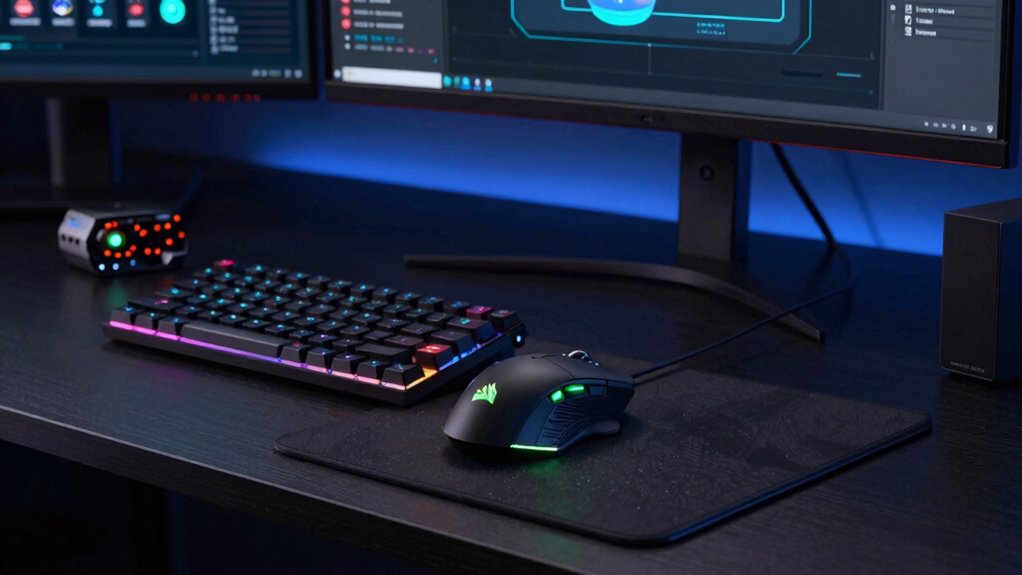
Customization and compatibility converge in a concise evaluation: six fully programmable buttons enable tailored configurations across gaming genres, while onboard memory preserves DPI and macro setups for instant use on different systems.
The Harpoon offers straightforward customization through software and onboard profiles, yet customization limitations appear when complex macros exceed onboard capacity or when PC-specific features are unsupported on consoles.
Compatibility caveats include Xbox One support for mouse-enabled games, which may vary by title and firmware, and potential driver conflicts on mixed OS environments.
Conclusion
In summation, the Corsair Harpoon 6K DPI delivers solid value for its size-class and price. Its compact, ergonomic design with textured grips supports extended sessions without fatigue, while the 6,000 DPI optical sensor offers reliable precision across typical gaming scenarios. Six programmable buttons augment customization, and on-board profiles streamline quick shifts between titles. While not groundbreaking, the Harpoon stands as a concise, capable option for casual and competitive players seeking portability, consistency, and straightforward configurability.