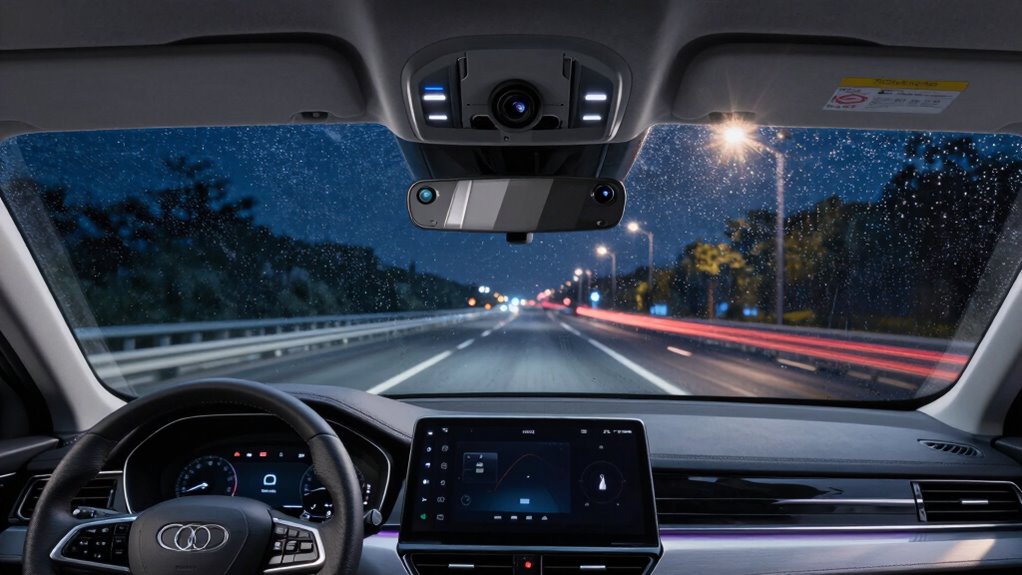
This review examines a compact 4K front and 1080p rear dash cam system. It emphasizes a utilitarian design with a compact dual-camera setup and a 1.5″ IPS display. Image quality centers on 4K front capture with a 170° field of view and a 1080p rear, aided by a fast F2.0 lens and six-layer optics. Storage includes 64GB built-in with loop recording and expandable up to 256GB, plus 5.8GHz transfer and independent recording. Real-world performance shows broad scene coverage and reliable license-plate capture; further nuances become clear as you continue.
Design and Key Features
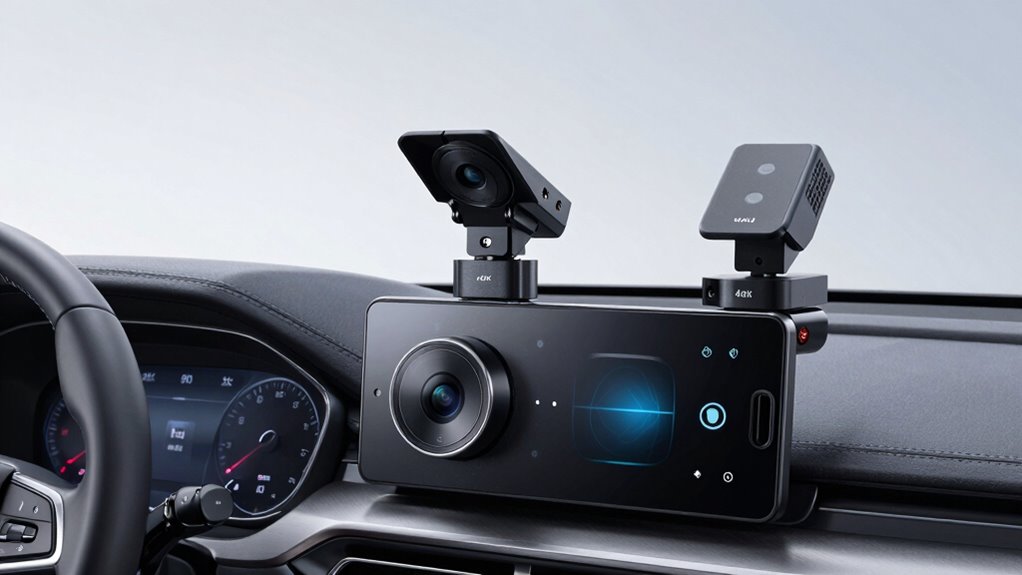
The design centers on a compact, dual-camera system that delivers 4K front and 1080p rear recording with a slim 1.5″ IPS display for status and control.
The form emphasizes straightforward integration and robust componentry, with emphasis on minimal footprint and orderly cable routing.
Design aesthetics reflect restrained lines and a utilitarian silhouette, prioritizing usability over ornamentation.
Material durability is evident in reinforced housings and multi-layer lens protection, supporting daily operation under varied conditions.
Interface is purpose-built for quick access to essential functions, while button placement and menu structure reduce distraction.
Image Quality and Lenses
Image quality is defined by a 4K UHD front sensor (3840×2160) paired with a 1080p rear camera, delivering largely sharp daytime footage and usable low-light performance aided by a fast F2.0 aperture and a six-layer lens.
The configuration supports strong directional detail with minimal distortion at typical driving speeds, while dynamic range handles high-contrast scenes by preserving highlights and shadows on the horizon line.
Infrared night vision is mentioned as a capability, but performance remains limited by sensor size and exposure constraints.
Storage, Recording, and Power
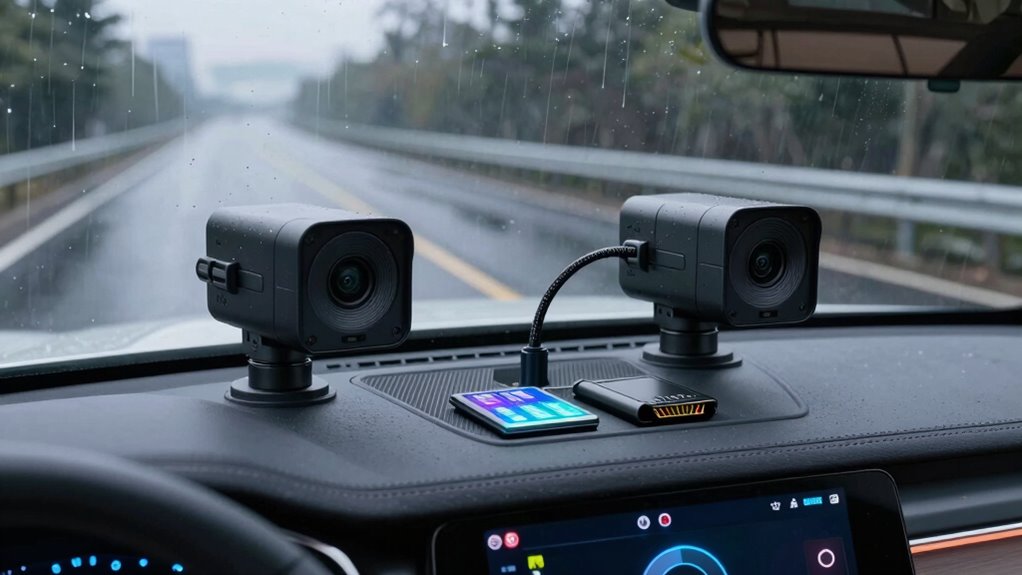
Storage and recording are handled by a built-in 64GB SD card with loop recording that overwrites oldest files as needed, while emergency clips remain protected and expandable storage up to 256GB is supported. The system uses a straightforward storage management approach: continuous capture with automatic secure-clip retention, and rapid offload via 5.8GHz WiFi for previews and downloads.
Recording behavior is consistent—dash cam powers on with the vehicle and logs events via G-Sensor-triggered clips. Power reliability is enhanced by continuous 12V supply options and optional hardwire for 24/7 Parking Mode, ensuring uninterrupted operation during parking and driving.
Connectivity, App, and Data Transfer
Connectivity, App, and Data Transfer ensures seamless access to recorded footage and configuration controls. The system relies on 5.8GHz WiFi for fast transfers and real-time preview, with the dash cam recording independently of connection status. The accompanying app enables control via WiFi while parked or driving, and data can be downloaded to a smartphone without interrupting recording. Potential connectivity limitations include range sensitivity and interference in crowded environments. The data transfer workflow emphasizes local storage integrity, clip locking, and selective download. Overall, the setup supports efficient retrieval, but users should anticipate occasional retries during peak network usage.
Real-World Performance and Use Cases
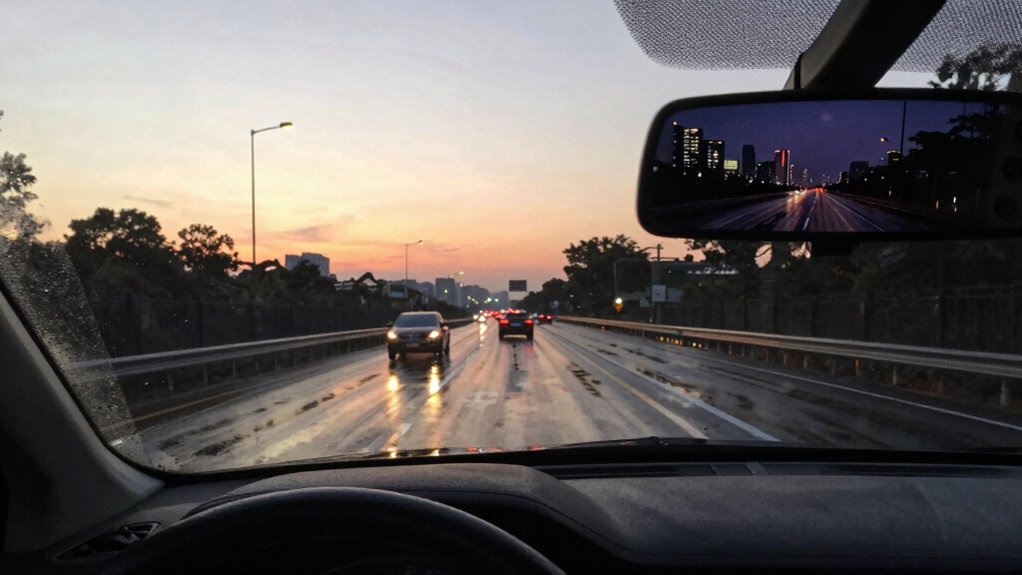
In practice, the 4K front and 1080p rear setup delivers high-resolution daytime footage with reliable license-plate visibility under good illumination, while the 170° front and 150° rear lenses cover broad road scenes. Real-world use shows consistent daytime clarity and adequate night performance with WDR, though extreme darkness may reduce plate recognition. The dual-camera arrangement supports straightforward evidence gathering in collisions and disputes. Storage, wake behavior, and parking mode enable continuous recording with minimal user intervention. Two word discussion ideas surface when evaluating usability and reliability. Performance tradeoffs arise between field of view, resolution, and file management, balancing detail against storage consumption and processing load.
Conclusion
The dual-camera solution delivers substantial value through true 4K front capture and reliable 1080p rear coverage, with flexible mounting and robust night performance. Its looping storage, lockable clips, and hardwire parking protections support evidence preservation in real-world scenarios for drivers, rideshare operators, and fleets. While setup is moderately technical and file management can be nuanced, the system offers dependable, independent operation with practical connectivity for previews and sharing. Overall, a capable, mission-focused option for comprehensive dash-cam coverage.