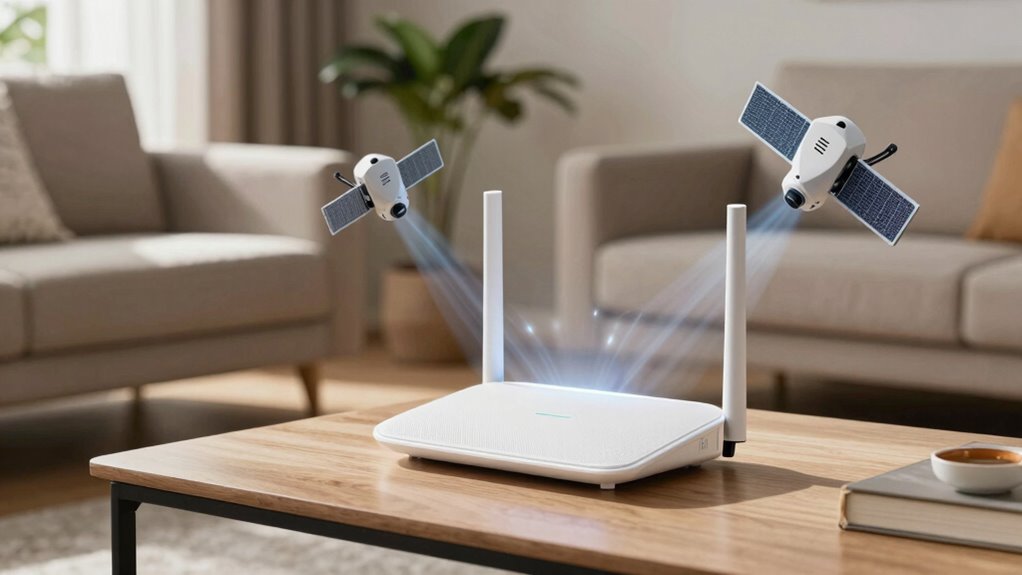
The eero 6+ delivers solid AX3000 performance with TrueMesh for efficient wireless routing. It supports dual-band 2×2 Wi‑Fi 6 and 160 MHz channels, offering strong coverage for gigabit plans. Built-in Zigbee/Thread radios simplify smart-home integration, reducing hub clutter. The system uses a compact design and easy app setup, with remote management and optional subscription services for security and network features. Some advanced capabilities require paid tiers, yet the framework remains scalable; more details await.
Design and Hardware Overview
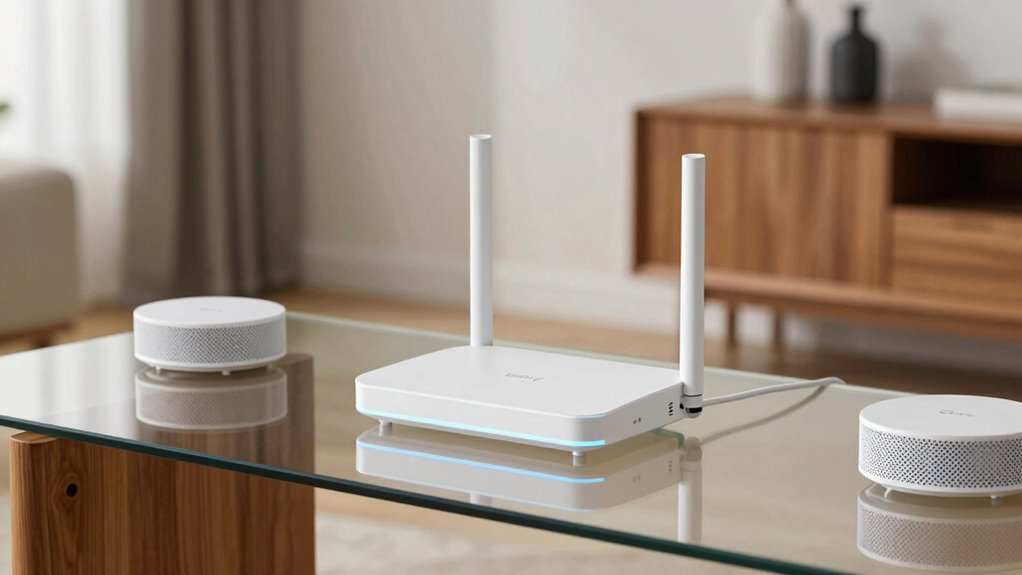
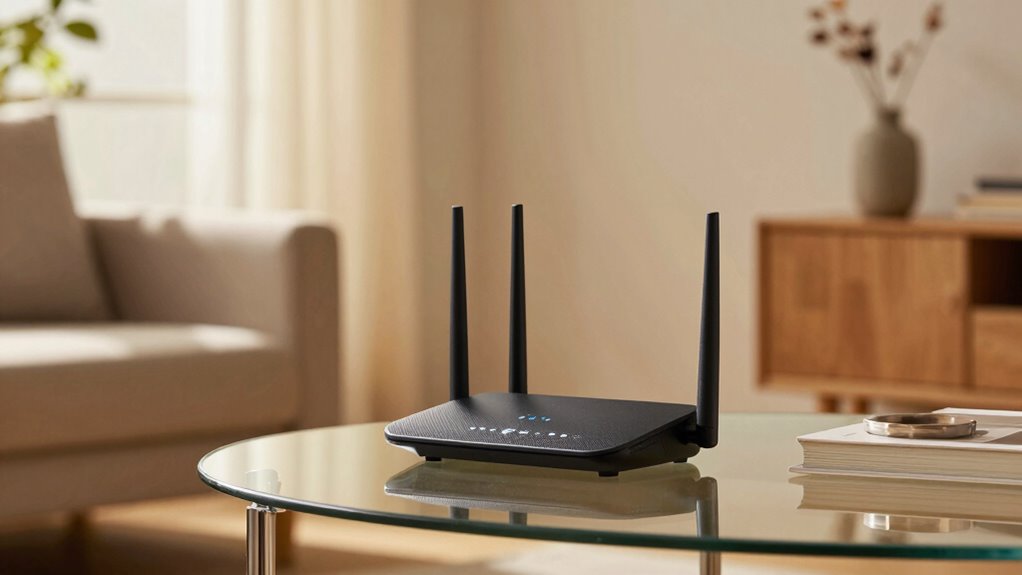
The Eero 6+ combines a compact router form factor with a straightforward hardware design suitable for a small to medium home. The design overview emphasizes a minimal silhouette and integrated components that support a AX3000 wireless stack.
Hardware specs include a 1 GHz dual-core processor, 512 MB RAM, and 4 GB flash, paired with dual-band 2×2 Wi‑Fi 6 capabilities and two auto-sensing gigabit Ethernet ports.
The enclosure dimensions are compact (roughly 3.9 by 3.8 by 2.6 inches), with operating conditions spanning 0°C to 40°C.
Performance and Network Features
Eero 6+ supports Wi‑Fi 6 speeds up to 1 Gbps and is optimized for gigabit internet plans, leveraging a 160 MHz channel for higher bandwidth and TrueMesh traffic routing to minimize dead zones. The device delivers AX3000 performance with dual-band operation and two auto-sensing gigabit Ethernet ports, supporting numerous devices with stable throughput.
Security features include WPA3, TLS, IPv6, and VPN passthrough, complemented by automatic software updates. While it excels in structured home networks, performance depends on client devices and interference.
unrelated topic, random tangent, subscription requirements for advanced management may affect long-term cost and perceived value.
Setup, Expansion, and Compatibility
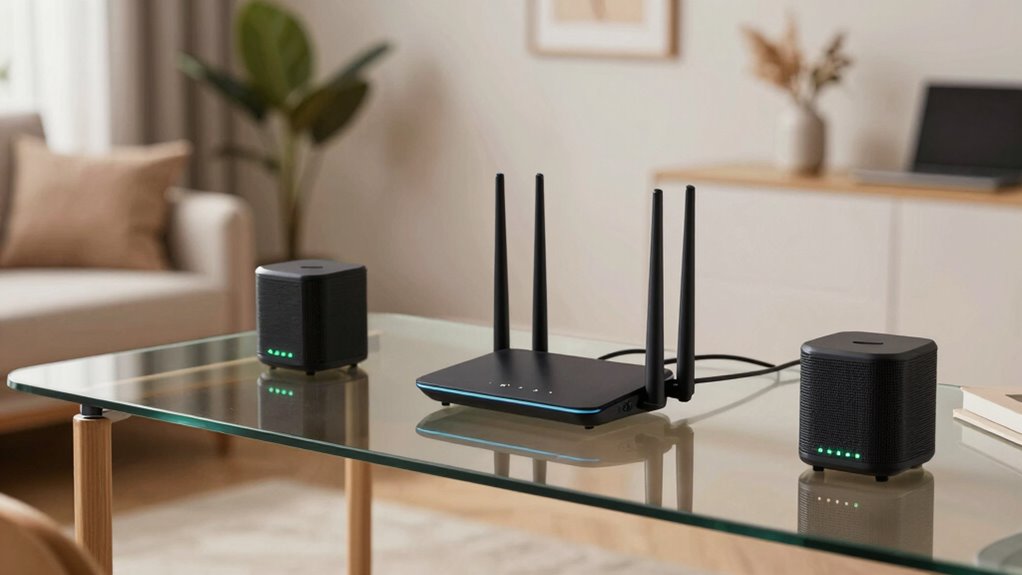
Setup occurs quickly via the eero app, enabling remote management and a straightforward initial configuration.
The process supports expansion by design: any eero can function as a gateway or be added to an existing network to extend Wi‑Fi coverage.
Compatibility remains strong with Alexa and Zigbee/Thread radios, and 802.15.4 support underpins easy integration with smart devices.
Required setup elements include a compatible mobile device and an active internet connection.
Cautions exist: combining eero 6+ with older eero units may reduce performance.
Potential users should anticipate routine firmware updates and address any setup challenges promptly to preserve stability.
Smart Home Integration and Security
Integrating with Zigbee/Thread radios and 802.15.4 support, the eero 6+ centralizes smart-home connectivity while enabling remote management and security updates. The device functions as a smart home hub, supporting Alexa, Zigbee/Thread, and Bluetooth LE 5.0 to reduce separate hubs.
Security features include WPA3, WPA2, TLS, IPv6, VPN passthrough, and automatic software updates. Online security and network-management services are available via subscription, adding granular control and threat alerts. While hardware offers robust performance for a mixed device environment, user experience depends on subscription tier and compatible ecosystem devices.
Final Thoughts and Value for Money
Given the smart-home strengths discussed earlier, the final assessment weighs how those capabilities translate into value for money. The analysis centers on design considerations and the pricing strategy, weighing build quality, ease of use, and ecosystem benefits against ongoing subscription needs. Eero 6+ offers solid AX3000 performance, reliable TrueMesh routing, and integrated Zigbee/Thread hubs, which reduce device clutter. However, some features require paid tiers, and expansion may incur incremental costs.
Conclusion
The eero 6+ delivers a straightforward, reliable mesh experience with solid Wi‑Fi 6 performance and broad smart‑home integration. Its strength lies in easy setup, seamless expansion, and built‑in Zigbee/Thread/Bluetooth LE hub functionality, simplifying device management. However, peak speeds align with gigabit plans rather than multi‑gig setups, and some features depend on optional subscriptions. Overall, it remains a user‑friendly, expandable choice for households prioritizing simplicity and smart‑home cohesion over maximum throughput or advanced security controls.