The Epson EpiqVision Ultra LS800 offers a compact ultra-short-throw form with a matte finish and deliberate weight distribution. It delivers 4K PRO-UHD clarity and solid brightness, though HDR highlights can saturate in bright scenes and color accuracy is competent, not market-leading. Android TV provides familiar apps, but the smart layer can feel uneven and occasionally slow. Setup benefits from calibration presets, yet wall proximity requirements demand careful placement. For a deeper look, additional details await beyond this summary.
Design and Build: Ultra Short Throw Aesthetics
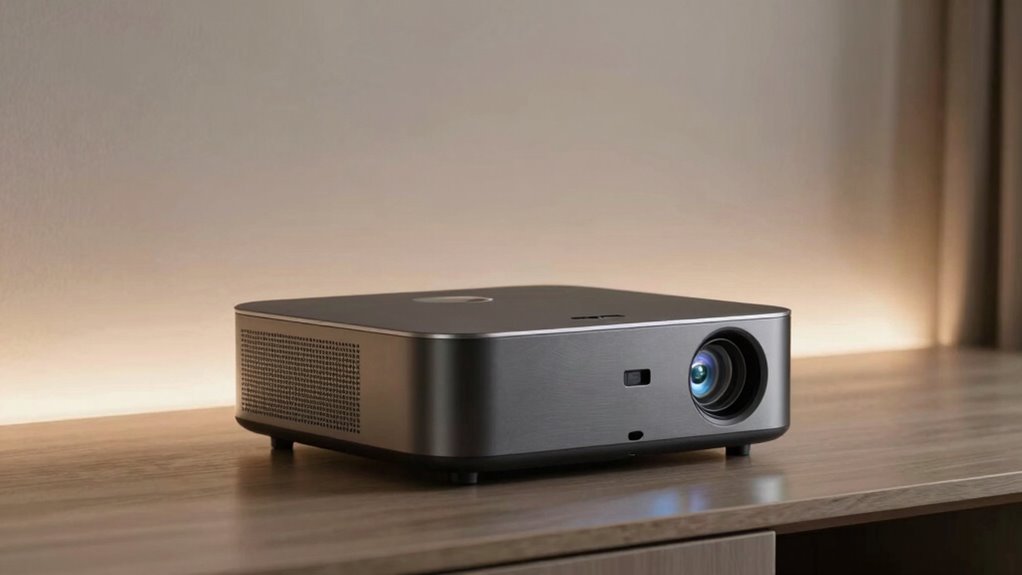
The Epson EpiqVision Ultra LS800 presents a deliberately compact, ultra-short-throw form factor designed to sit close to the wall while maximizing screen size. The enclosure emphasizes a restrained silhouette with a matte black finish and minimal chrome accents, aiming for unobtrusive integration in varied spaces. Construction appears solid, though weight distribution invites scrutiny during setup.
The design prioritizes wall proximity, reducing glare risk and optimizing placement flexibility. Despite the compact footprint, venting and throw distance remain measurable constraints.
Image Quality and HDR Performance
How effectively does the LS800 render color and contrast at its ultra-short throw distance? The analysis focuses on image quality and hdr performance under typical viewing conditions. With 4K PRO-UHD, the projector delivers sharp edge definition and solid brightness, though highlight detail can saturate in bright scenes. Color accuracy remains competent, yet not industry-leading; color gamut appears well managed but occasionally veers toward oversaturation in high-contrast frames. HDR performance is serviceable when paired with capable sources, offering credible luminance steps and deeper blacks for a projector of this class. Overall, image quality is balanced, hdr performance dependable, not exceptional.
Smart Features and UI Experience
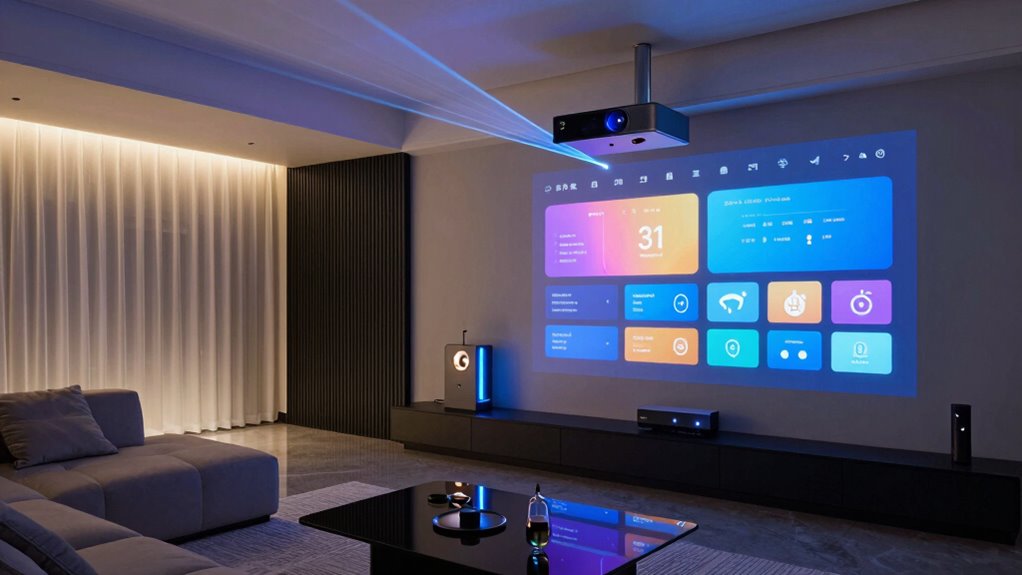
Does the LS800 deliver a coherent smart experience, or are its Android TV capabilities hampered by integration quirks?
The system presents Android TV with standard apps and Google Assistant, but performance reveals uneven responsiveness.
Boot times are acceptable, yet occasional lag appears when launching streaming channels, suggesting modest processing headroom for 4K apps.
The interface remains familiar, with predictable navigation and organized content rows; however, app updates can intermittently stall opponents, impacting workflow.
Boosted app responsiveness marginally improves interaction, but inconsistencies persist.
Remote control ergonomics are decent, though button placement could better accommodate frequent app switching and volume adjustments in varied viewing contexts.
Setup, Connectivity, and Living Room Integration
Generally, the LS800’s setup emphasizes speed and precision, but practical usability reveals tradeoffs between initial alignment ease and ongoing peripheral management; the ultra-short-throw design eases placement yet requires careful wall distance to optimize keystone-free images, while multi-point picture adjustment helps dial-in geometry without iterative trial. Setup efficiency emerges in quick alignment via calibration presets, yet cable routing and wall mounting remain meticulous tasks for clean integration. Connectivity is straightforward through three HDMI ports and Bluetooth; remote ergonomics favor a compact, tactile handset. Living room integration shows competent Android TV streaming, though wall-anchored placement may constrain seating options and future reconfigurations.
Sound, Gaming, and Practical Considerations
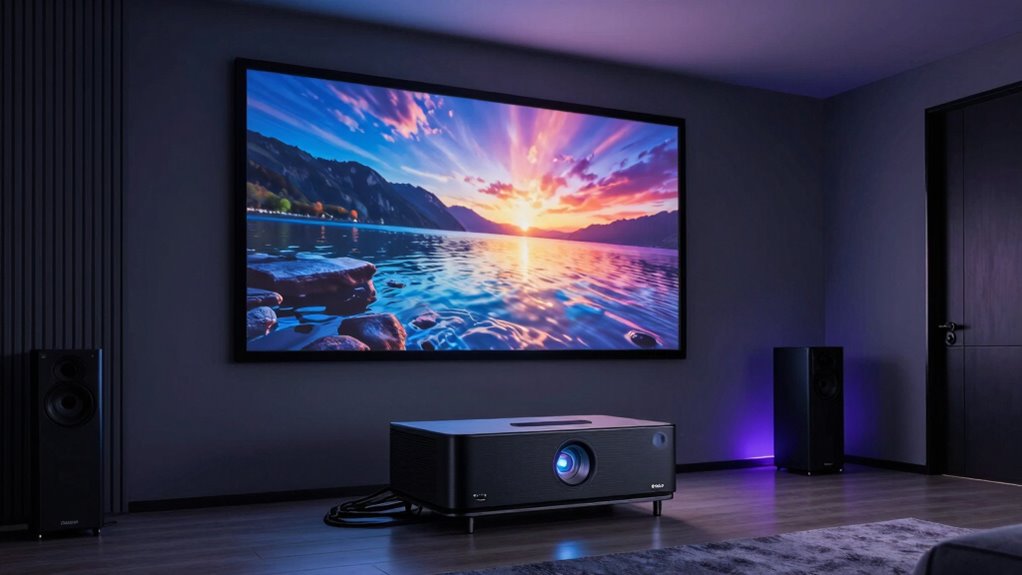
Sound quality and gaming performance hinge on the LS800’s built-in 2.1-channel Yamaha system and its laser-based brightness, yet practical use reveals tradeoffs: while the speakers provide reasonable room-filling audio for casual viewing, they do not replace a dedicated soundbar for critical dialogue or dynamic range.
The system offers adequate clarity at modest volumes, but midrange presence suffers with loud action scenes, and dialogue can blur under pressure.
Gaming latency remains a concern for competitive use, though average console or PC titles play smoothly at default settings.
Conclusion
The Epson EpiqVision Ultra LS800 demonstrates solid brightness and 4K PRO-UHD detail, yet its laser system and image processing show uneven HDR performance, with highlights and color handling occasionally clipping in bright rooms. Android TV and built-in speakers add convenience, but demand for external audio remains likely. Ultra-short-throw practicality is compelling for compact spaces, though setup can be meticulous to avoid geometry flaws. Overall, pragmatic value exists, but performance gaps temper enthusiasm for flagship home-theater ambitions.