The JVC DLA-NZ7 combines a purpose-built, stability-focused chassis with precise lens controls for repeatable calibration. Its 8K E-Shift system reconstructs 4K content onto an 8K canvas through rapid, sub-pixel shifts that preserve edge fidelity. Image quality centers on high native brightness, 40,000:1 contrast, and stable luminance via BLU-Escent illumination. Frame Adapt HDR analyzes HDR10 content per frame to protect detail in highlights and shadows. Detailed setup and calibration steps promise further performance gains for discerning viewers.
Design and Build: A Look at the JVC DLA-NZ7
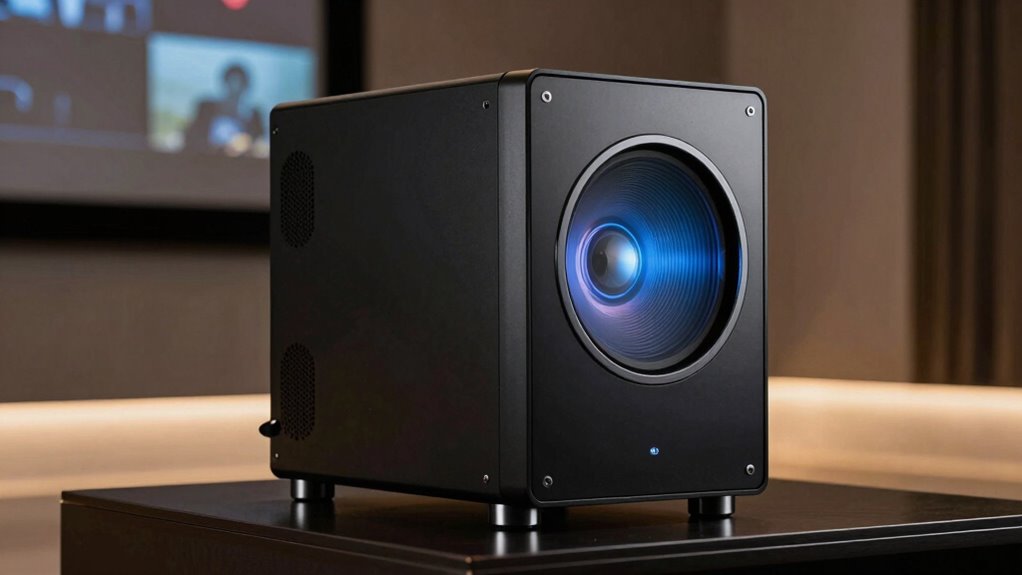
The JVC DLA-NZ7 presents a purposefully engineered chassis that prioritizes precision and stability over ornamental styling. The enclosure emphasizes rigid dimensions and controlled airflow, reducing vibrational influence on image stability. Design aesthetics are restrained, favoring functional contours and minimal protrusions. Build materials combine aluminum alloy externals with reinforced internal mounts, supporting tight tolerances for optics alignment. Insulation and cooling channels are integrated to mitigate thermal drift during extended use. Weight distribution appears balanced to minimize projector shift during installation tweaks. Access panels and lens adjustments are deliberately straightforward, enabling repeatable calibration. Overall, the design pairs rigidity with serviceability, supporting long-term optical consistency.
8K E-Shift Technology: How It Delivers 4K Content at 8K Resolution
K E-Shift technology enables 8K-resolution output from 4K content by employing precise, two-direction multi-axis shifting of the image.
The process relies on calibrated e shift mechanics that move the displayed image across a 8K canvas to interpolate additional detail.
By combining rapid sub-pixel shifts with synchronized sampling, the projector reconstructs 8,192 × 4,320 frames from native 4K inputs.
This 8K upscaling approach preserves edge fidelity and texture, while maintaining low latency for playback and gaming.
The method emphasizes consistent color and luminance, minimizing temporal artifacts during motion, thereby delivering enhanced perceived sharpness without full native 8K input.
Image Quality in Focus: Brightness, Contrast, and Color Performance
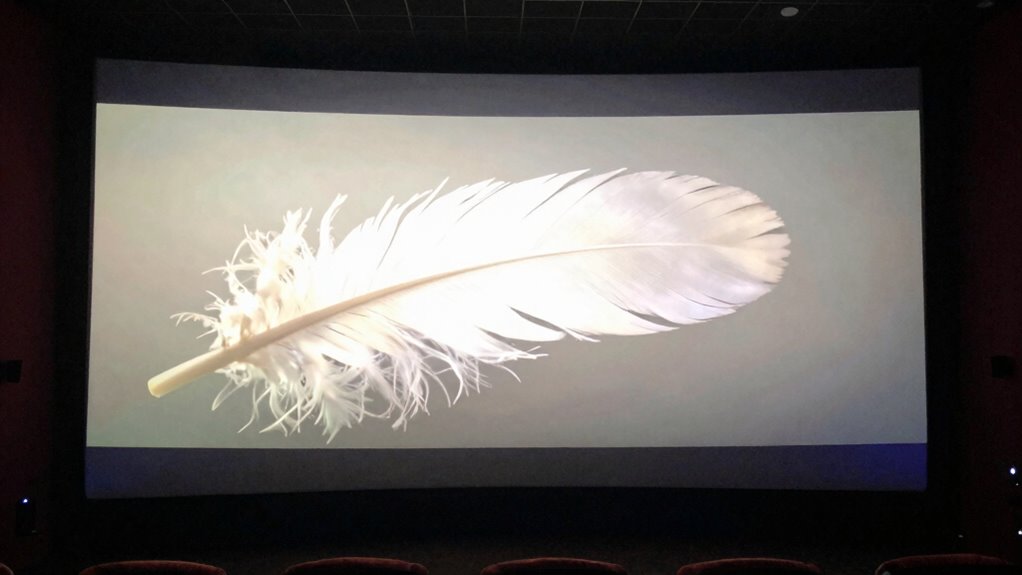
Are brightness, contrast, and color performance the core determinants of the NZ7’s perceived image quality? In quantitative terms, brightness measures real output against ambient conditions, while contrast assesses native and dynamic depth across content. The NZ7’s native 40,000:1 and Infinity:1 dynamic range support distinct shadow separation and highlight preservation, with BLU-Escent illumination contributing to stable luminance over time. Color performance relies on wide gamut execution and accurate rendering after color calibration. Brightness consistency across the frame is maintained via uniform light distribution, while calibration processes ensure sources align with target gamma and REC 709. Overall, precise calibration underpins repeatable, faithful color and luminance behavior.
HDR Mastery: Frame Adapt HDR and Compatibility With Formats
Frame Adapt HDR analyzes HDR10 content frame-by-frame to optimize tone mapping, ensuring consistent highlight retention and shadow detail across scenes. The implementation operates as a dynamic, per-frame processor that preserves intent while adapting luminance to scene content, reducing clipping in bright elements and preserving texture in dark areas. This technique supports seamless color transitions with minimal banding, contributing to stable frame mapping across varying content. By emphasizing frame-level adjustments, color interoperability is maintained between source metadata and display capabilities, yielding uniform HDR presentation.
Setup, Calibration, and Real-World Viewing Experience
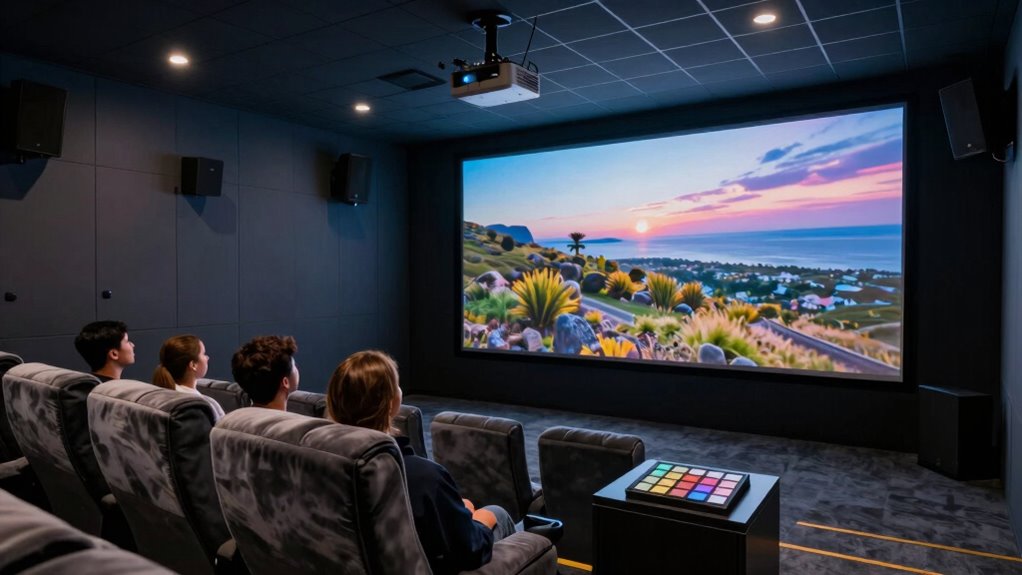
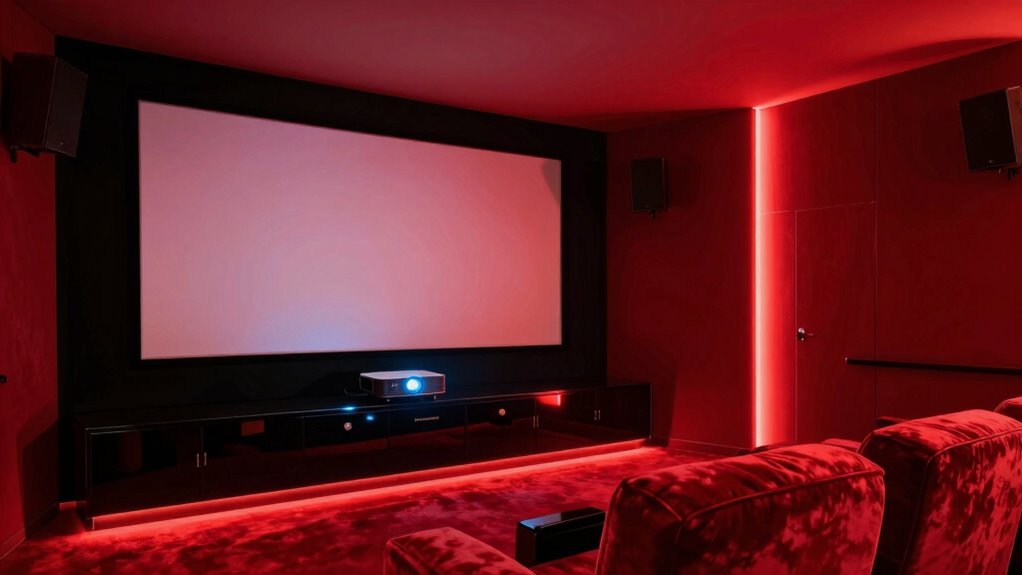
Initial setup and calibration for the JVC DLA-NZ7 prioritize precise alignment and image fidelity, leveraging its installation mode and adjustable lens controls to establish an optimal baseline. The process emphasizes repeatable geometry: lens shift, keystone, and aspect adjustments align with screen dimensions while preserving pixel alignment and uniform focus across the image. Calibration relies on factory and user-accessible controls, including mask and anamorphic settings, to minimize halo and distortion. Real-world viewing then benefits from modest room lighting and calibrated source material. Practical considerations include setup tips for placement and cable management, plus accounting for room acoustics to enhance perceived immersion.
Conclusion
In summary, the NZ7 combines strong native contrast with compelling 8K e-shift upscaling that preserves 4K detail and texture, aided by Frame Adapt HDR for dynamic HDR tone mapping. Its laser longevity and flexible installation support set practical usability apart. While the 8K enhancement is impressive, the value hinges on viewer sensitivity to upscaled detail versus native 8K content. Overall, the NZ7 justifies its premium for dedicated home theaters prioritizing image fidelity, consistency, and long-term brightness.