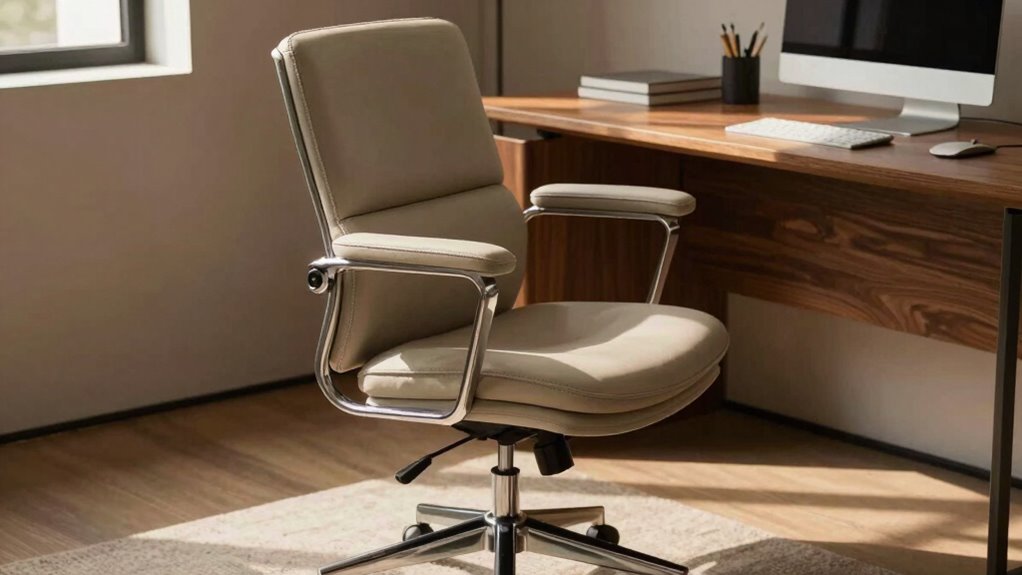
The KERDOM Ergonomic Office Chair features a breathable mesh back with a distinctive Y-shaped support that aligns with the spine. It delivers adaptive lumbar contouring and a high-density seat cushion designed for long sessions. The chair emphasizes stability over excess padding, reducing pressure points while maintaining comfort. It offers 3D adjustable armrests, height- and angle-adjustable headrest, and a tilt with three-level locking. For those seeking durable, distraction-free performance, more details follow.
Design and Comfort
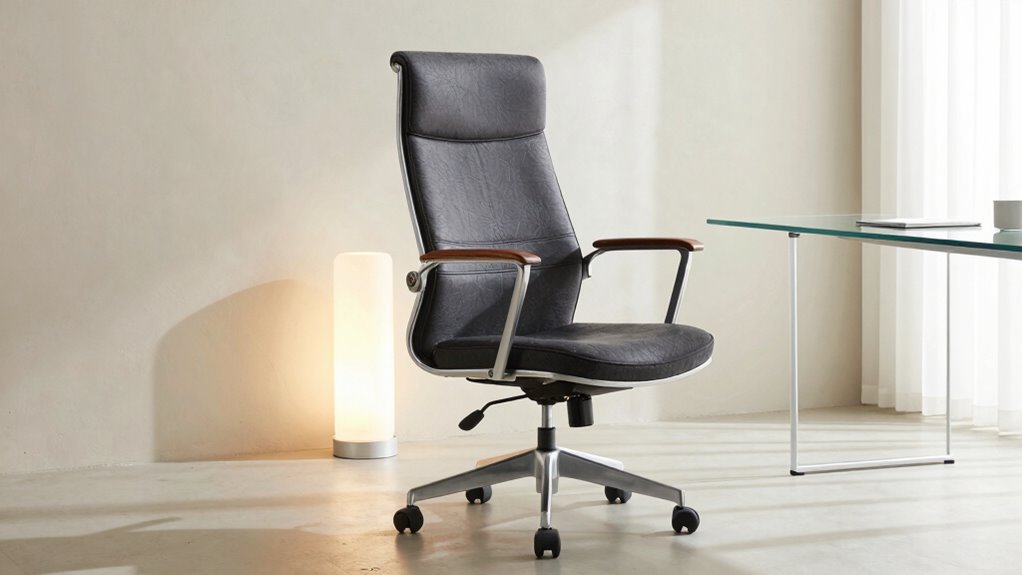
The KERDOM Ergonomic Office Chair combines a Y-shaped backrest with a breathable mesh design to align with the spine and reduce pressure on the back and shoulders. In evaluation, the backrest conforms to lumbar curvature, while the seat cushion uses high-density foam to sustain comfort under prolonged use. Material durability is notable, with reinforced stitching and premium mesh that resists snagging. Designers prioritized stability over excessive padding, limiting pressure points. Potential design flaws include limited tilt lock variability and minor stitching variability at edges. Overall, the configuration supports posture-focused seating, prioritizing user comfort without compromising structural integrity or long-term usability.
Ergonomics and Adjustability
Ergonomics and adjustability center on how the chair accommodates diverse body types and tasks through measurable, user-facing controls. The design integrates adjustable 3D armrests, a height- and angle-adjustable headrest, and tilt with three-level locking, enabling individualized seating configurations. Back support follows a Y-shaped spine-friendly contour, promoting balanced load distribution and reducing pressure points. The mesh back and seat encourage air flow, sustaining comfort during long sessions. Ergonomic benefits include neck, shoulder, and lumbar relief when properly configured. Adaptability considerations emphasize straightforward adjustments, repeatable settings, and compatibility with varied workstyles, enhancing long-term usability and user satisfaction.
Performance and Durability
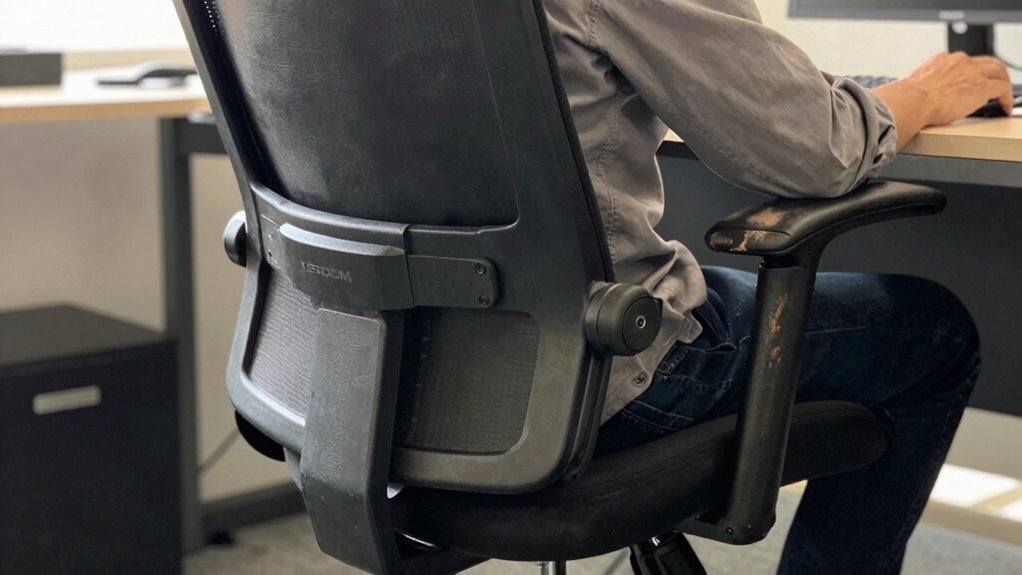
How does sustained use hold up under real-world workloads? In sustained trials, the chair demonstrates stable performance across daily desk tasks, with consistent seating support and reliable tilt mechanics.
Durability testing indicates robust frame integrity, sealed components, and quiet operation under routine movements. The 3D armrests and adjustable headrest maintain positioning with minimal drift, while the backrest retains Y-shaped support under dynamic postures.
Material longevity shows the high-density cushion resisting compression and the mesh fabric preserving breathability over time. Overall, the design maintains comfort and function, aligning with user expectations for long-term productivity.
Conclusion
From a data-driven, user-centric perspective, the KERDOM ergonomic office chair delivers solid ergonomic support without sacrificing setup ease. The Y-shaped back, breathable mesh, and high-density seat cushion work together to reduce fatigue and maintain posture across extended use. Adjustable 3D armrests, headrest, and a 90–135 degree tilt with three-position lock enhance comfort customization. Rated to 300 pounds and equipped with quiet wheels, it offers durable performance for varied home-office environments, backed by a one-year warranty.