
The OUPES Mega 1 delivers solid power with 2000W continuous output and a 1024Wh LiFePO4 base, expandable to 5120Wh without extra inverters. It offers rapid charging, including 0-80% in 36 minutes and 26 minutes with AC plus solar, plus a <20ms UPS transfer. Its reliability hinges on LiFePO4 durability and a capable BMS, though long-term performance may vary in extreme climates. The ecosystem is compact and app-controlled, but third-party expansion remains unclear—details that matter for future-proofing await closer inspection.
Power Specs and Performance
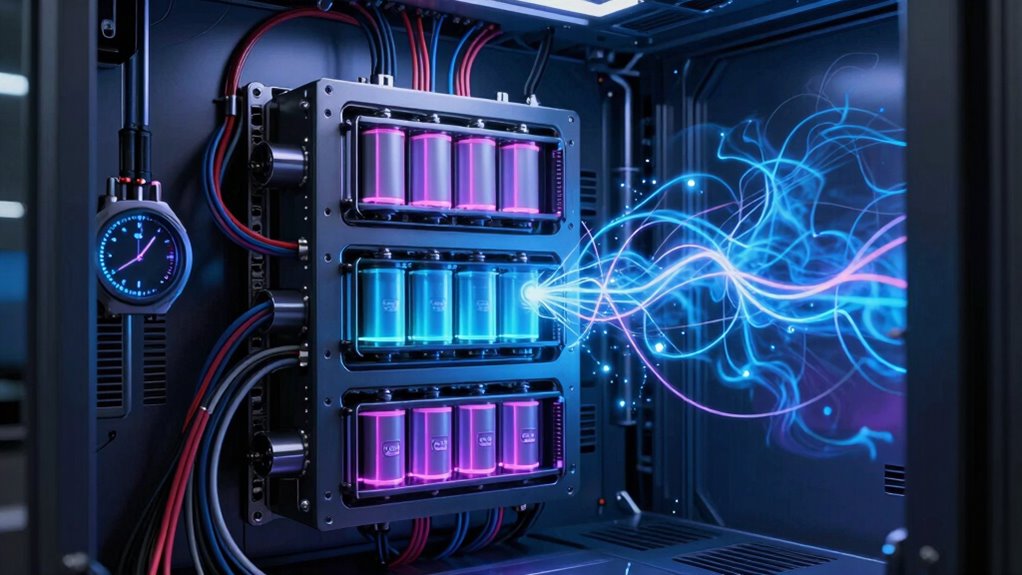
The OUPES Mega 1 delivers solid core capability with 2000W continuous output and a 4500W surge, backed by a 1024Wh LiFePO4 battery that can be expanded to 5120Wh using two B2 Extra Batteries.
In practice, the unit sustains demanding loads with stable thermals and a quick <20ms UPS transfer. Charging shows strong performance: 0-80% in 36 minutes via AC, 26 minutes with AC+solar, and MPPT input up to 800W.
Battery performance remains robust over cycles, while solar efficiency benefits from rapid balancing and multi-panel input. Overall, power delivery remains reliable, though real-world gains depend on panel configuration and load profiles.
Battery, Lifespan, and Reliability
Is longevity a strength or a limitation for the OUPES Mega 1? The battery system centers on LiFePO4 chemistry, promising 3500+ cycles and stable thermals, supporting long-term headroom. In practice, the 1024Wh base pack remains robust, with claimed capacity retention around 80% after years of heavy use, suggesting solid battery lifespan.
The UPS feature and modular expansion help preserve reliability, while the intelligent BMS mitigates overcharge and thermal risks. However, reliability concerns persist around long-term degradation under extreme climates and high-cycle scenarios, warranting independent testing.
Charging, Solar, and Efficiency
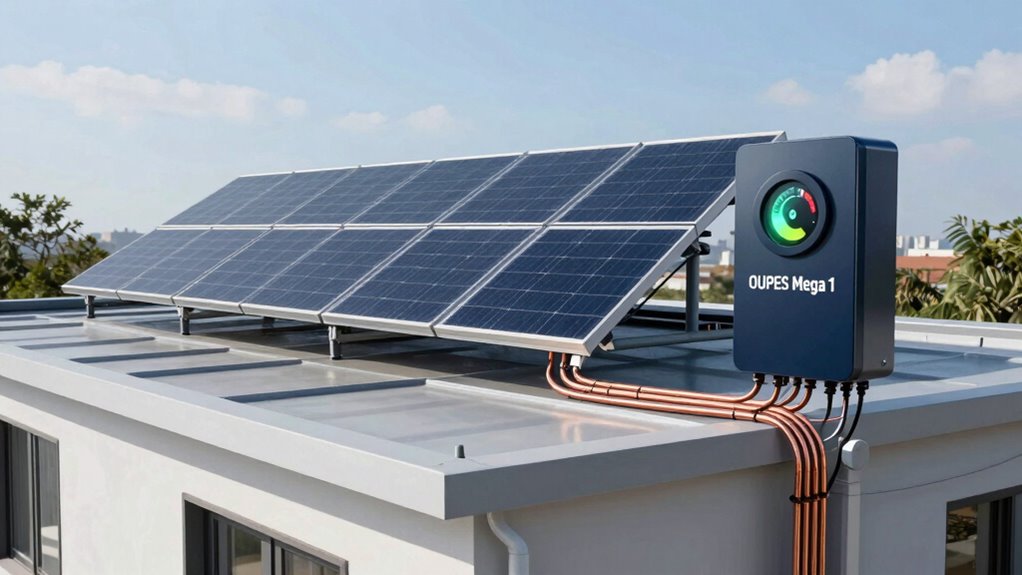
Fast-charging performance stands out: AC charging from 0 to 80% in 36 minutes is substantial, and pairing AC with solar reduces that to 26 minutes, claimed as three times faster than conventional. The system supports up to 800W MPPT input, enabling practical solar integration, with 61 minutes to 80% using three 240W panels. This approach emphasizes duo energy synergy rather than solitary AC speed.
Solar efficiency hinges on panel quality and conditions, exposing real-world variability. While fast recharge is impressive, overall efficiency depends on thermal management, BMS stability, and how often expansion affects output. Lifecycle resilience remains central to sustained performance in varied deployments.
Expandability and Ecosystem
Expandable up to two B2 Extra Batteries requires no extra inverters or wiring, enabling scalable capacity while preserving a compact, integrated workflow. The module emphasizes straightforward expandability options, enabling users to lift capacity without rearranging core hardware. Ecosystem integration appears in cross-compatibility through a single app-controlled interface and Bluetooth monitoring, though third-party accessory support remains unclear. The system’s physical outputs—USB-C, USB-A, DC, and AC—support diverse peripherals, aiding modular deployment. However, reliance on proprietary B2 Batteries could constrain long-term upgrades. Overall, expandability is practical but guarded by ecosystem lock-in, balancing flexibility with future-proofing considerations.
Real-World Use Cases and Durability

Real-World Use Cases and Durability demonstrate how the OUPES Mega 1 translates its specs into practical performance. The unit delivers pro-grade power with 2000W continuous output and pure sine wave, supporting sensitive electronics and heavy loads in real world scenarios. Its LiFePO4 battery, 3500+ cycles, and stable thermals back long deployments, while the UPS (<20ms) enhances reliability under outages. Durability concerns are mitigated by modular expansion and solid construction, yet field experiences emphasize cooling and connector wear in extreme conditions. Overall, the system suits film sets, mobile offices, emergency response, and off-grid work, balancing robust endurance with flexible, scalable use.
Conclusion
The OUPES Mega 1 delivers solid, professional-grade power with strong capability and thoughtful expandability. Its 2000W continuous output and rapid charging routines address demanding off-grid needs, while the LiFePO4 chemistry promises longevity and stable heat management. However, the brief 36-minute 0-80% AC charge, though impressive, can feel optimistic in real-world conditions, and the solar input cap at 800W may limit true off-grid autonomy for energy-intensive days. Overall, a reliable, scalable solution with caveats worth acknowledging.