
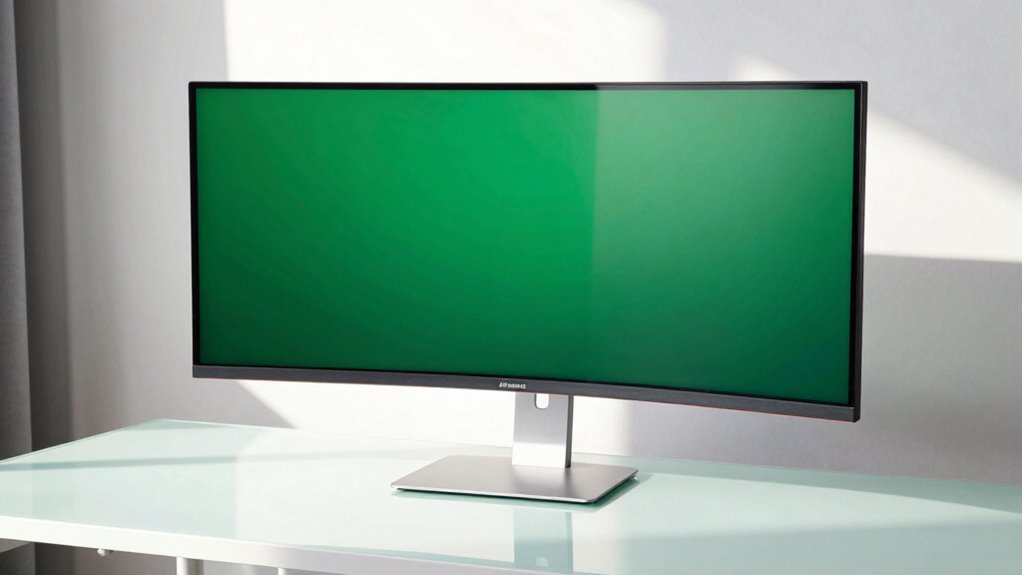
The Philips Brilliance 279P1 offers a compact, frameless 27-inch 4K IPS panel with strong ergonomics and a clean single-cable USB-C dock. Build quality is solid, but the frame’s edges and stand footprint limit compact desk setups. Color accuracy is decent out of the box but requires calibration for reliable previews, and HDR impact remains modest. Connectivity is versatile, though HDR performance and out-of-box color volumes temper premium positioning. Curious about specific trade-offs and overall value? Continue for details.
Design and Build Quality
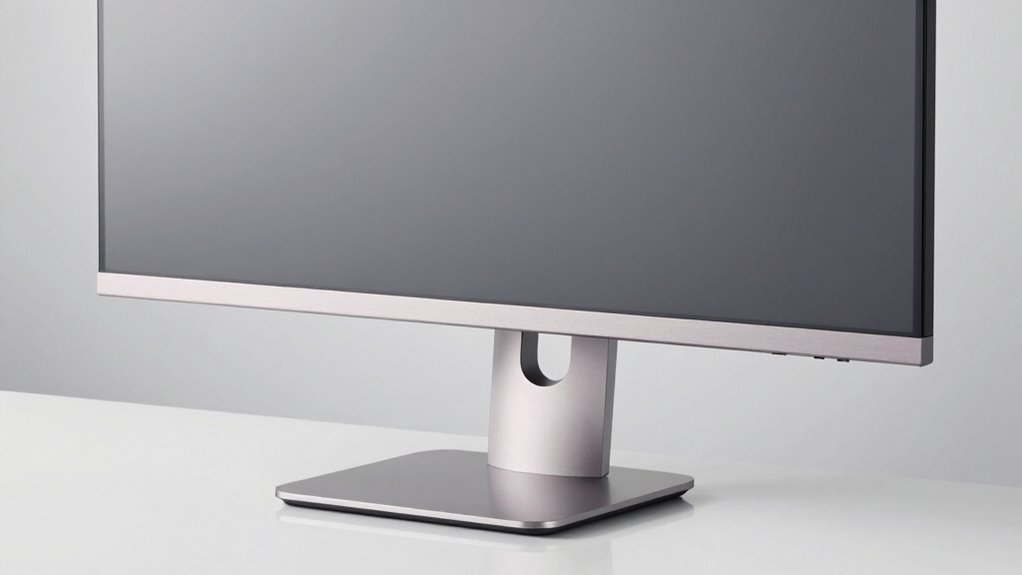
The Philips Brilliance 279P1 presents a clean, frameless design with a compact stand that prioritizes adjustability over ornate styling.
The construction conveys solidity, with precise seams and a stable base that supports ergonomic positioning.
Its all-black chassis emphasizes minimalism, though edges appear utilitarian rather than premium.
The frameless bezel enhances perceived immersion but may invite brightness bleed at perimeters in high-contrast scenes.
Design critique centers on how the stand’s range enables height, tilt, and swivel without losing balance.
Color grading expectations rely on neutral tones; material consistency supports predictable shading, yet plastic finish may limit premium perception.
Display Performance and Color
The 27-inch panel delivers 4K UHD resolution (3840×2160) with IPS technology, yielding sharp text and wide viewing angles. In display performance, color accuracy is solid but not peak for professional grading, requiring careful profiling. The monitor covers a broad sRGB gamut with reasonable Adobe RGB extension, yet some greens read slightly cool out of the box. Calibration workflow is straightforward: access advanced color settings, create and save ICC profiles, and employ a calibrated target for consistent results. Luminance response remains stable across typical office brightness, while HDR performance is modest. Overall, accurate previews hinge on proper calibration rather than out-of-the-box settings.
Connectivity and Docking Features
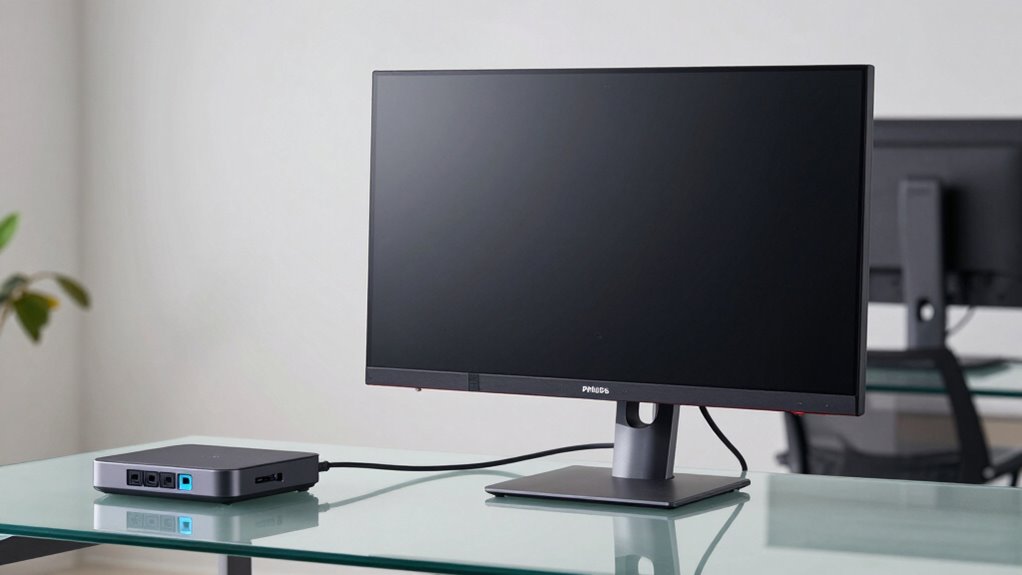
Single-Cable USB-C docking stands out, delivering power delivery, data, and video over one link to simplify desk setup. The connectivity suite centers on USB-C docking with power delivery, plus HDMI, DisplayPort, and USB-A endpoints, enabling a compact, cable-minimized workstation. RJ-45 pass-through adds network convenience, while the integrated dock aligns with the monitor’s chassis for a clean setup. Unboxing experience reveals included cables and documentation, though some users may require compatible devices for full feature parity. Warranty coverage is clearly stated, offering reassurance against component failure.
Ergonomics and Eye Comfort
Is ergonomics a decisive factor in long-term usability? The Philips 279P1 integrates SmartErgo with adjustable height, tilt, swivel, and rotation, yet real-world use reveals notable ergonomic drawbacks. The stand offers solid range, but footprint and center-of-gravity can impede placement in compact desks, prompting occasional awkward seating angles.
The display’s 4K clarity benefits detailed work, while built-in Eye Comfort features—flicker-free operation, low Blue mode, and LightSensor—mitigate eye fatigue, though adaptive brightness can feel inconsistent in varied lighting.
Practical Use Cases and Value
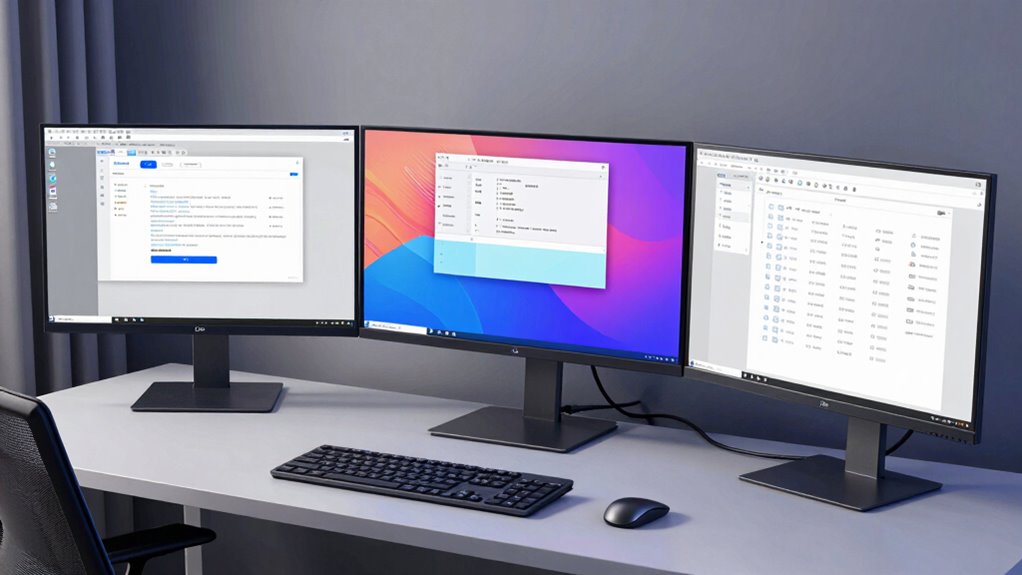
Practical use cases for the Philips 279P1 center on professional workloads that demand sharp visuals and flexible connectivity. The monitor supports CAD, 3D graphics, and large spreadsheets with consistent 4K detail, aiding precise linework and data review. Its USB-C docking and RJ-45 pass-through streamline workflows, reducing desk clutter and peripheral swaps. However, design flaws emerge in long-term reliability and color consistency across extended sessions, potentially impacting critical tasks. The price/value proposition remains competitive for its feature set, yet considerations include maintenance costs and replacement timing. Overall, the 279P1 offers strong utility for pros, balanced by notable caveats that affect total ownership value.
Conclusion
The Philips Brilliance 279P1 showcases strong value for professionals who need 4K clarity and robust connectivity. Its USB-C docking, RJ-45 pass-through, and SmartErgo base address workflow efficiency, while PowerSensor and LightSensor boost long-term usability. However, the panel’s color precision and uniformity are serviceable rather than exceptional for high-end color work, and peripheral management could be more intuitive. Overall, it’s a solid, feature-rich choice for CAD and multitasking, with notable ergonomic and energy-saving advantages.