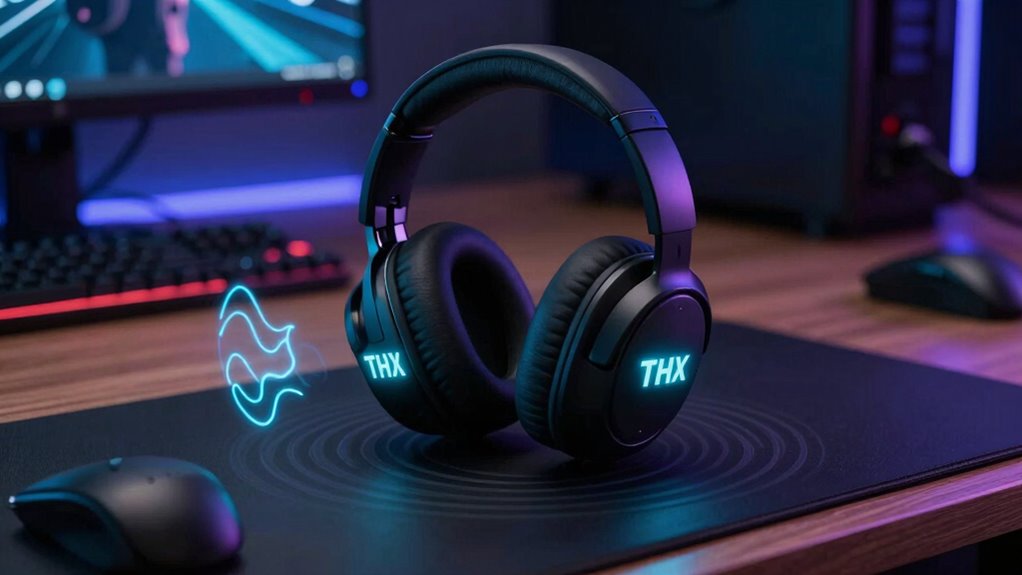
The Razer Nari Ultimate integrates THX Spatial Audio and built-in haptics to emphasize gaming cues over pure fidelity. Its design blends soft cloth, leatherette, and cooling gel cushions, with weight distributed by clamp force and earcup pressure. Audio is decently separated but not musical-accurate, and localization can drift in complex scenes. Haptics are conditional and discrete, not continuously immersive. Wireless performance is stable on 2.4 GHz but console compatibility varies; expect environment and firmware to shape results. More details ahead.
Design and Comfort
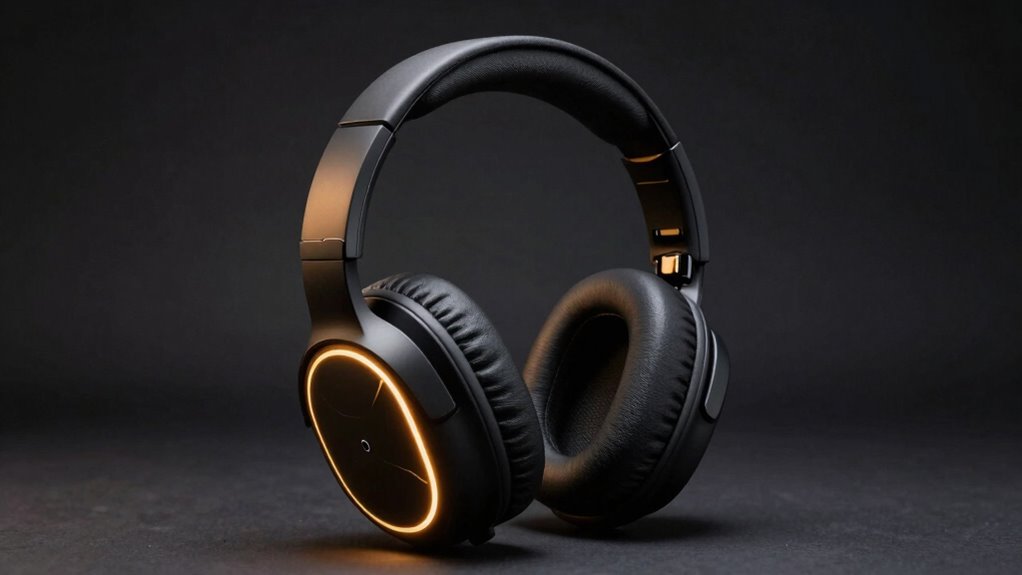
The Razer Nari Ultimate’s design centers on long-session comfort and functional adjustability, but its standout feature—an auto-adjust headband—warrants scrutiny for practicality rather than novelty.
The construction blends soft cloth and leatherette with cooling gel-infused cushions, supporting extended wear.
Weight distribution appears balanced, yet real-world comfort depends on clamp force and earcup pressure, not solely padding.
Design comfort hinges on breathability and pressure dispersion over time.
Headband adjustability integrates with a memory-like fit, but durability under frequent resizing remains uncertain.
Audio Quality and Haptics
Given the THX Spatial Audio and hypersense haptics, the Nari Ultimate’s audio presentation claims to deliver 360° positional cues and tactile feedback; however, practical clarity hinges on how accurately the system translates engine- or step-based cues into perceived space and whether haptics synchronize reliably with voiced dialogue and environmental sounds.
The result shows moderate audio fidelity with defined separation yet occasional localization drift under complex scenes.
Haptic realism remains conditional, favoring discrete stimuli over continuous immersion.
Design and comfort support extended wear, yet overall audio behavior prioritizes gaming cues over musical accuracy.
Wireless performance and compatibility stay stable within its 2.4 GHz band.
Wireless Performance and Compatibility
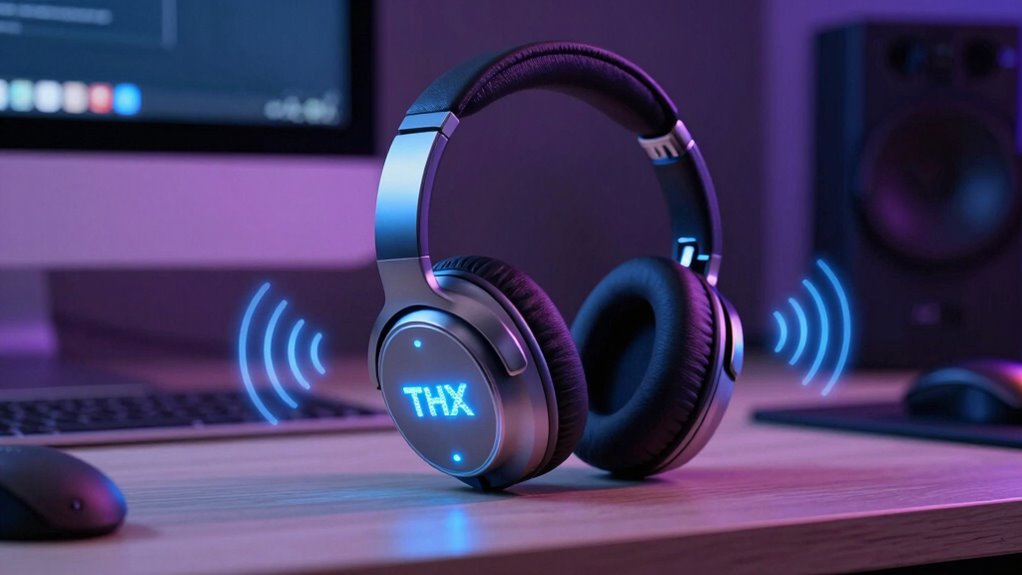
Wireless performance and compatibility remain stable within the 2.4 GHz band, but practical reliability hinges on interference handling and firmware optimization. The evaluation treats wireless performance as contingent on environmental factors and firmware responsiveness rather than inherent capability.
While the headset delivers consistent 2.4 GHz audio, compatibility limitations emerge: Xbox omission restricts cross-console use and renewals may affect feature access. Latency is minimized yet not negligible for competitive play, and haptic feedback can introduce sporadic stalls if bandwidth fluctuates.
Conclusion
In summary, the Razer Nari Ultimate fuses THX Spatial Audio with haptic feedback to create a unique, technically ambitious package. Yet its wireless stability, compatibility gaps (notably with Xbox and renewal constraints), and the practical value of in-headset vibrations invite skepticism. Comfort and build are credible, but signal fidelity must be weighed against latency and haptic consistency. For niche gamers seeking tactile immersion, it offers an intriguing, but not universally persuasive, solution.