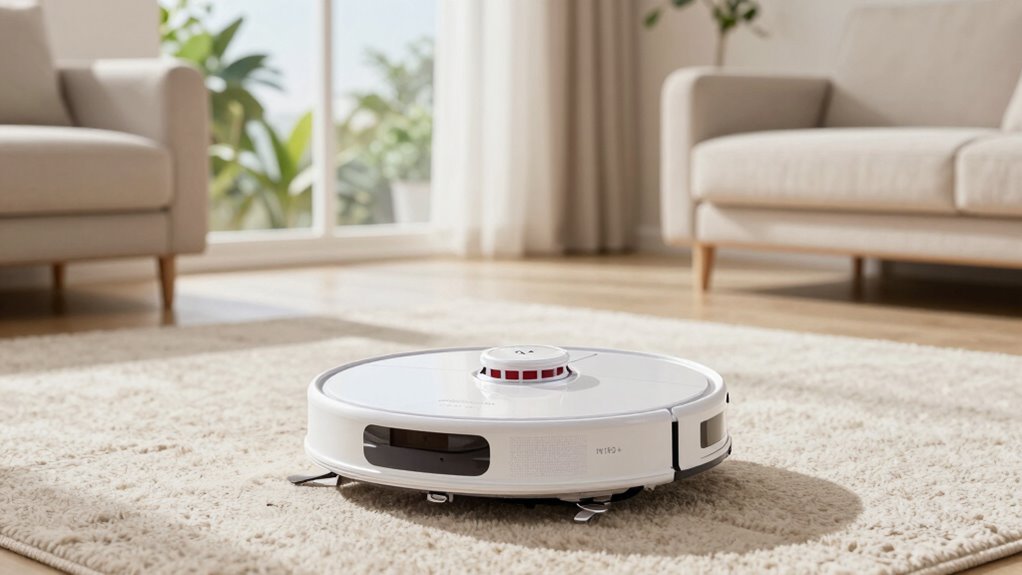
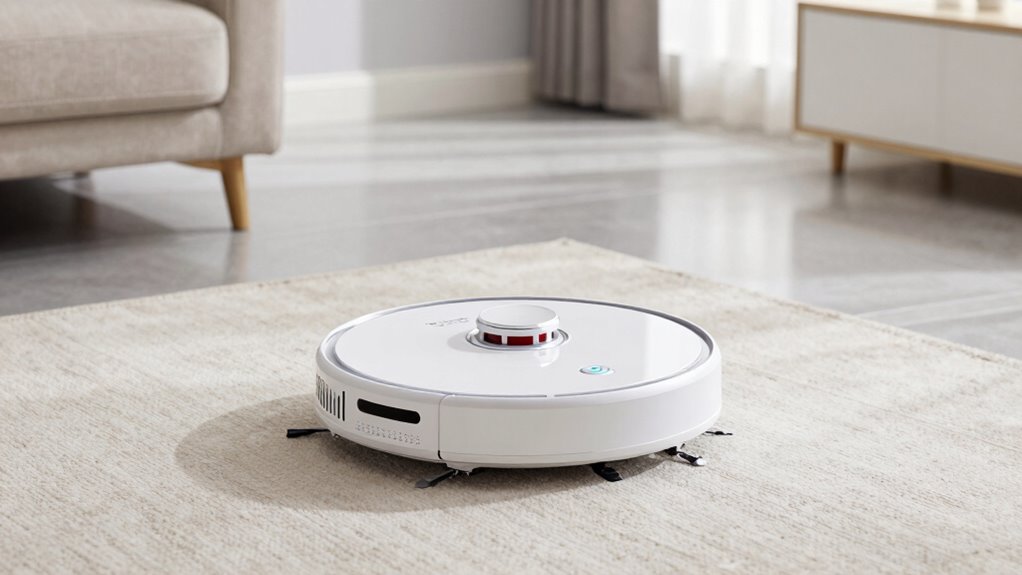
The Roborock Q7 Max+ offers strong suction with 4200 Pa peak performance, maintaining debris removal on both carpets and hard floors. It combines vacuuming, mopping, and a twin cleaning mode for versatility, supported by Precise LiDAR mapping and 3D tagging for accurate navigation. It provides up to 180 minutes of runtime and automatic emptying via the auto-empty dock, with zone controls and no-go zones for targeted cleaning. Details below reveal how these elements balance efficiency and coverage.
Performance and Suction Power
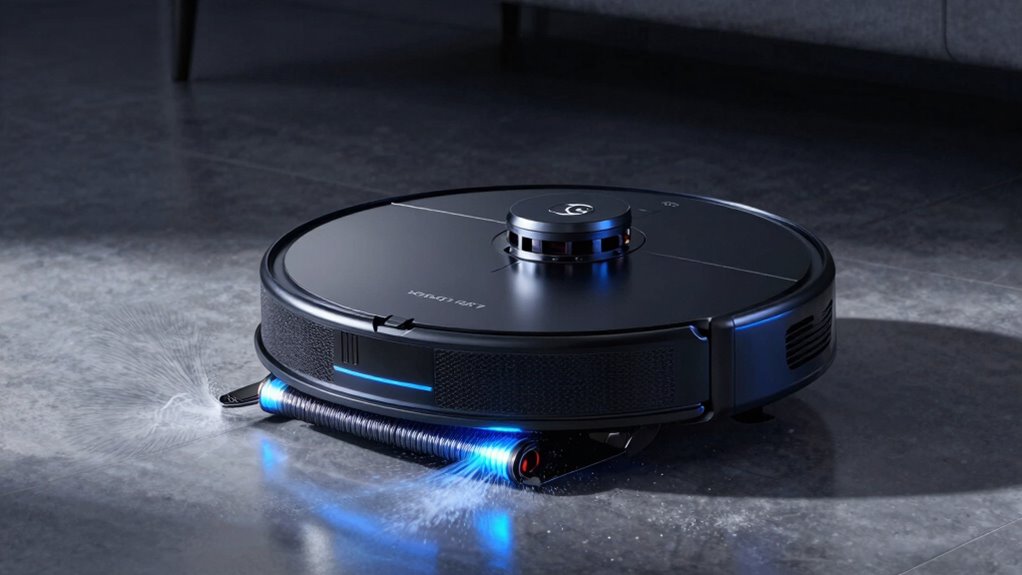
Roborock’s Performance and Suction Power section evaluates the Q7 Max+ on deep cleaning and versatility. Suction efficiency appears strongest on carpets, where auto-boost engages on detected pile, lifting embedded debris and hair with consistent pull. Across hard floors, the 4200 Pa peak sustains debris removal without excessive pass repetition. Noise levels remain moderate, presenting a balanced acoustic profile for daytime use and multi-room sessions. Efficiency metrics align with runtime, enabling up to 180 minutes under light loads. Overall, the unit demonstrates robust suction performance, paired with predictable, low-disruption operation suitable for mixed flooring environments.
Cleaning Modes: Mopping, Vacuum, and Twin Cleaning
The Roborock Q7 Max+ supports three integrated cleaning modalities: vacuuming, mopping, and a combined twin-cleaning mode. In practice, Vacuum targets embedded debris with 4200 Pa suction, while Mopping leverages a 350 ml water reservoir and up to 30 water-flow levels for surface control. Twin Cleaning simultaneously administers suction and liquid dispersion, enabling coordinated crosswork across floors.
The system offers granular adjustments to Water Flow by floor type, enabling tailored dampness without over-wetting. Transitioning between modes is quick, preserving runtime efficiency.
Mapping and Navigation Capabilities
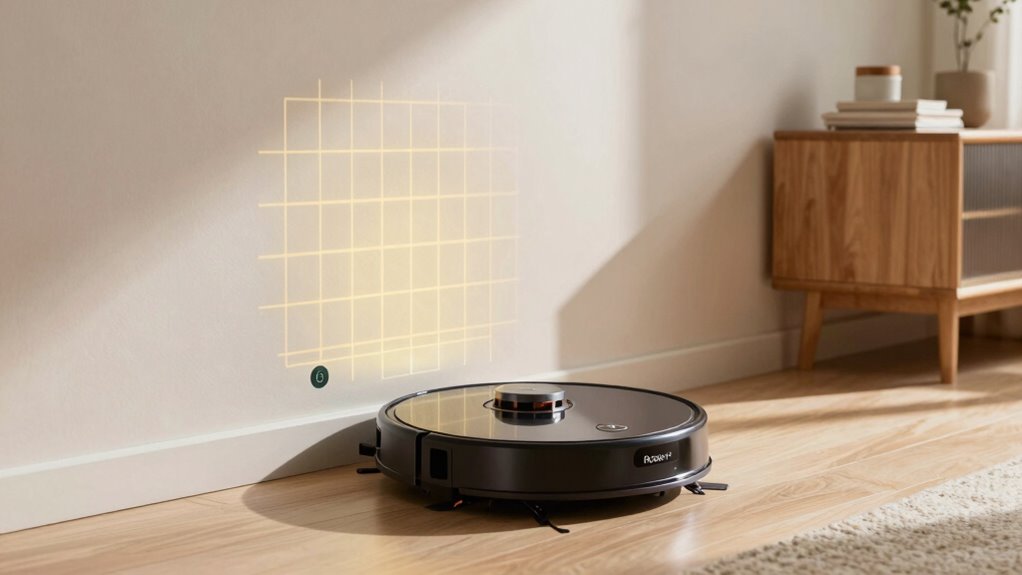
Mapping and navigation capabilities enable precise environment understanding and organized cleaning paths. The Roborock Q7 Max+ uses PreciSense LiDAR to generate accurate maps and track routes, supporting efficient backtracking and targeted coverage. 3D mapping provides visual depth and furniture/material tagging to approximate obstacles and plan routes, while no go zones reinforce restricted areas. The system supports smart cleaning features driven by mapped data, enabling zone-specific tasks and improved path optimization. While mappings are detailed, occasional dynamic changes (temporary obstacles) may require re-scans. Overall, navigation reliability is strong, with clear mapping feedback and deliberate routing decisions.
Capacity, Battery Life, and Auto-Empty Dock
Capacity and endurance statistics align to a practical, long-interval cleaning use case: the Q7 Max+ delivers up to 180 minutes of runtime on a single charge, covering as much as 3229 square feet depending on floor type and cleaning mode. The device emphasizes capacity considerations, with a 470 ml dustbin and 350 ml water tank supporting extended sessions before prompting maintenance. Auto-Empty Dock Pure enables hands-free disposal via a 2.5 L dust bag, extending intervals between empties. Battery efficiency aligns with steady, low-drag operation, though peak suction periods reduce runtime modestly. Overall, endurance matches typical domestic cleaning cycles.
Connectivity, App Features, and Zone Controls
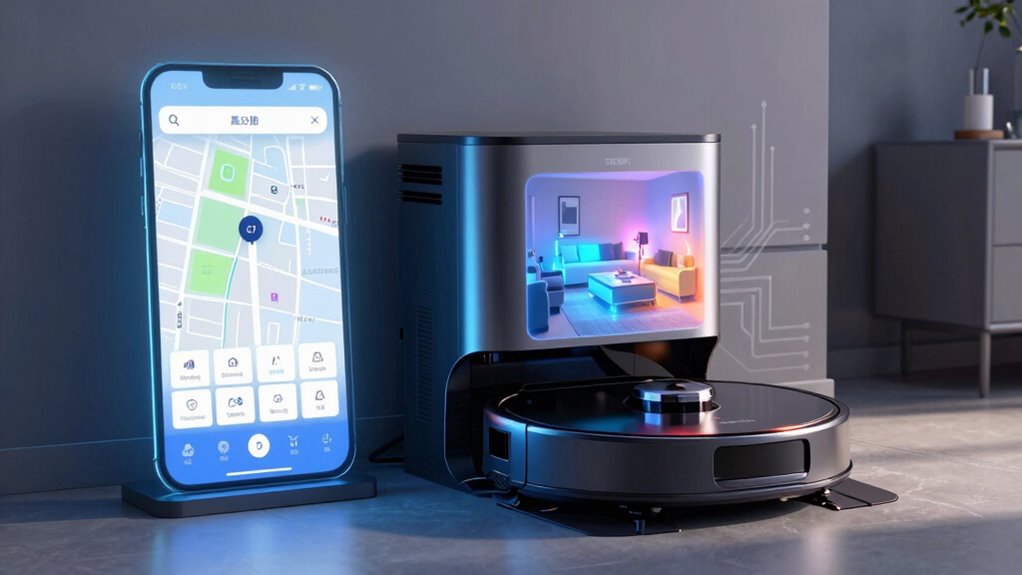
Connectivity and app features center on straightforward control and flexible zone management. The Roborock Q7 Max+ supports 2.4 GHz Wi-Fi, enabling app-based scheduling, manual start, and voice commands, though network performance depends on signal stability. Zone controls are clear: no-go and restricted zones can be set per map, with virtual walls and select room-focused cleaning. The interface presents maps, floor plans, and cleaning history succinctly, aiding diagnostic review.
Battery features are noted but not emphasized; navigation remains LiDAR-driven and precise. Real-time status updates, firmware refresh prompts, and compatibility with routines contribute to minimal manual intervention and predictable maintenance.
Conclusion
The Roborock Q7 Max+ stands out for sustained runtime, robust suction, and a capable dual-action system that vacuums and mops with adjustable water flow. Its LiDAR-based mapping and 3D planning improve efficiency, while the auto-empty dock reduces maintenance. Some users may find the app workflow requires acclimation, and the mopping is best on hard floors rather than deeply soiled surfaces. Overall, it delivers long-interval cleaning with strong convenience and precise navigation.