The Samsung 98-Inch Neo QLED centers its appeal on a monumental design and precise build, with a slim bezel and sturdy stand that emphasize form and rigidity. Picture performance relies on Quantum Matrix with Mini LED illumination and 4K processing, delivering solid brightness and HDR accuracy, though not transformative. The sound system provides some spatial cues via OTS+ but lacks consistent directionality. Smart features are functional but imperfect. For a fuller assessment, more detail awaits beyond this summary.
Design and Build: A Monumental 98-Inch Display
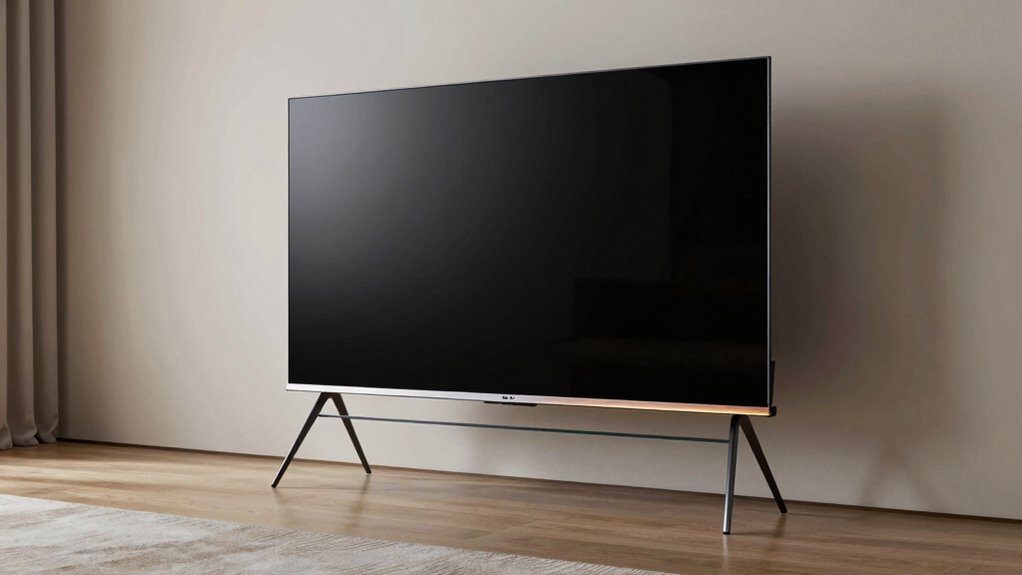
The Design and Build of the Samsung 98-Inch Neo QLED presents a spectacle that centers on scale, not subtlety. The intention is measured, yet the size drives evaluation more than texture alone. Design aesthetics are evident in the slim bezel and uniform chassis, though proportionally it dominates space and room dynamics. Build rigidity appears solid, with precise seams and a sturdy stand that anchors substantial weight. The enclosure accommodates cooling and cable routing without appearing ornamental. However, the emphasis on monumental footprint raises questions about practicality, durability under transport, and long-term usability in diverse environments. Overall, scale defines form, not function alone.
Picture Quality: Quantum Matrix and 4K Processing in Action
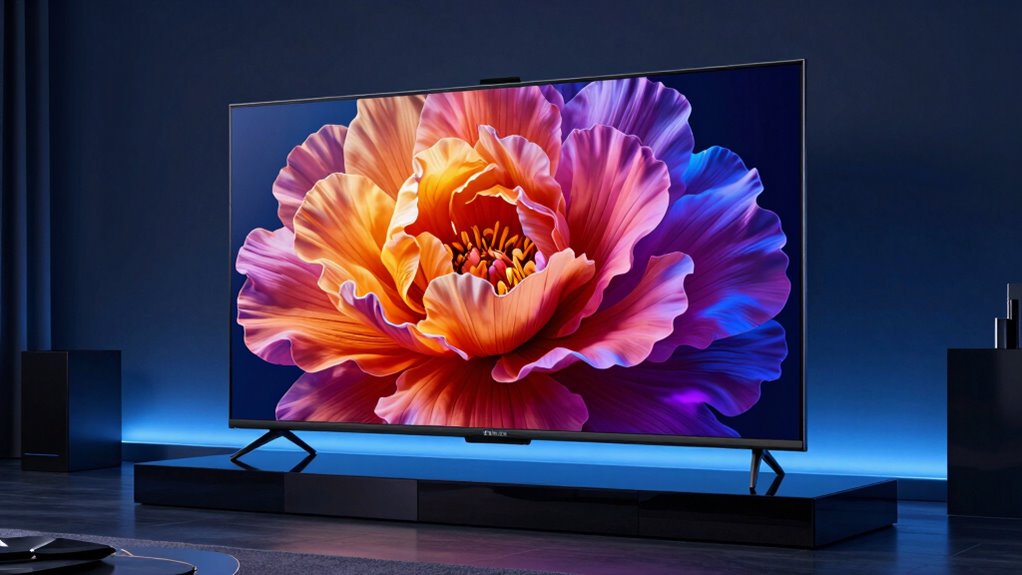
Quantum Matrix technology drives the core of the 98-inch Neo QLED, leveraging Mini LED illumination and a dense array of local dimming zones to push brightness, contrast, and HDR precision.
The implementation appears methodical, yet benefits hinge on source quality and signal handling.
Four k processing is central to upscaling and motion clarity, but its effectiveness varies with content and cadence; some footage exhibits unintended edge artifacts or over-sharpening.
The Neo QLED demonstrates solid color fidelity and broad brightness, though calibration sensitivity remains.
Overall, picture quality is competent, with quantum matrix delivering measured improvements rather than transformative leaps.
Cautious skepticism remains warranted.
Sound and Smart TV Experience: OTS+ Surround and Voice Assistants
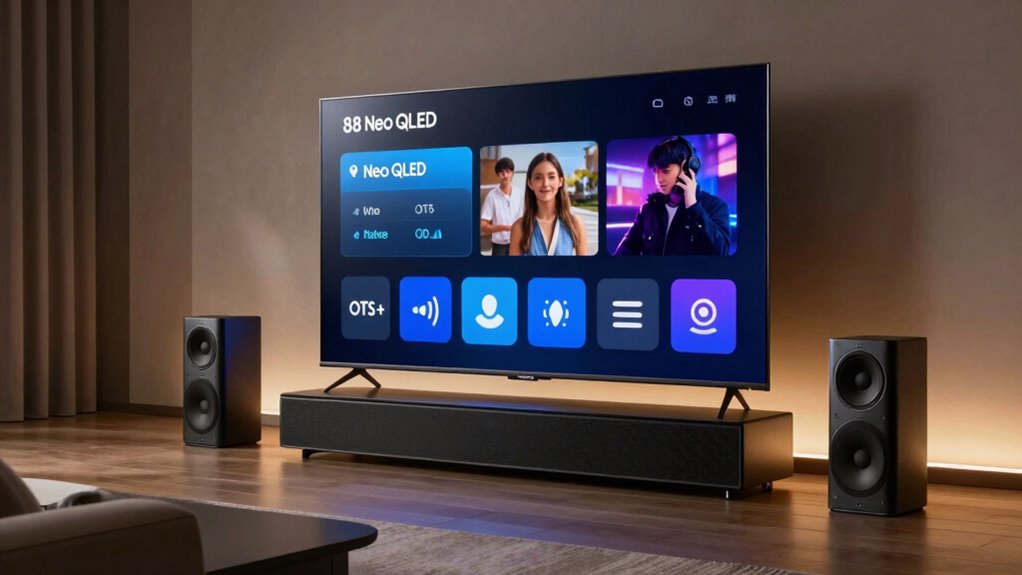
Evaluating the sound and smart TV experience, one should question whether Object Tracking Sound+ genuinely delivers immersive, spatial audio beyond marketing claims.
The OTS+ surround system is spatially aware but often reveals limitations in directionality and consistency across content types. Dialogue tends to sit centrally, while effects may feel siloed rather than enveloping.
Samsung’s multiple voice assistants—Bixby, Alexa, and Google—offer practical versatility, yet voice recognition can falter in noisy rooms or when distant microphones pick up delays.
Conclusion
In sum, the 98-inch Neo QLED delivers on spectacle more than everyday practicality. Its Quantum Matrix and 4K processing yield striking images with impressive HDR potential, yet benefits hinge on high-quality source material and optimal viewing conditions. OTS+ audio is a credible add-on, though spatial immersion remains context-dependent for large rooms. Smart features and voice assistants enhance usability, but glare, firmware quirks, and the cost-to-value equation invite cautious skepticism about long-term, room-to-room performance.