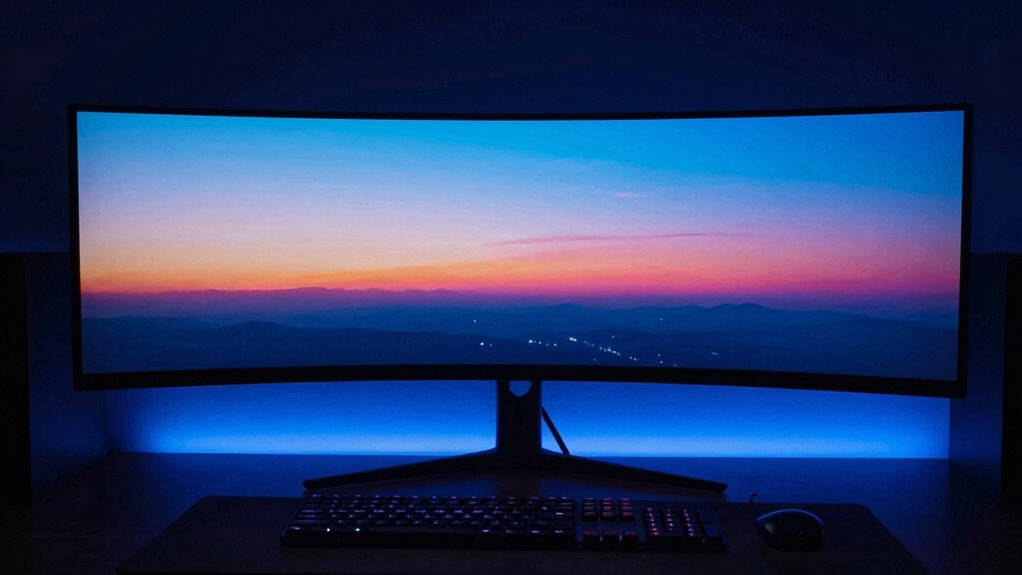
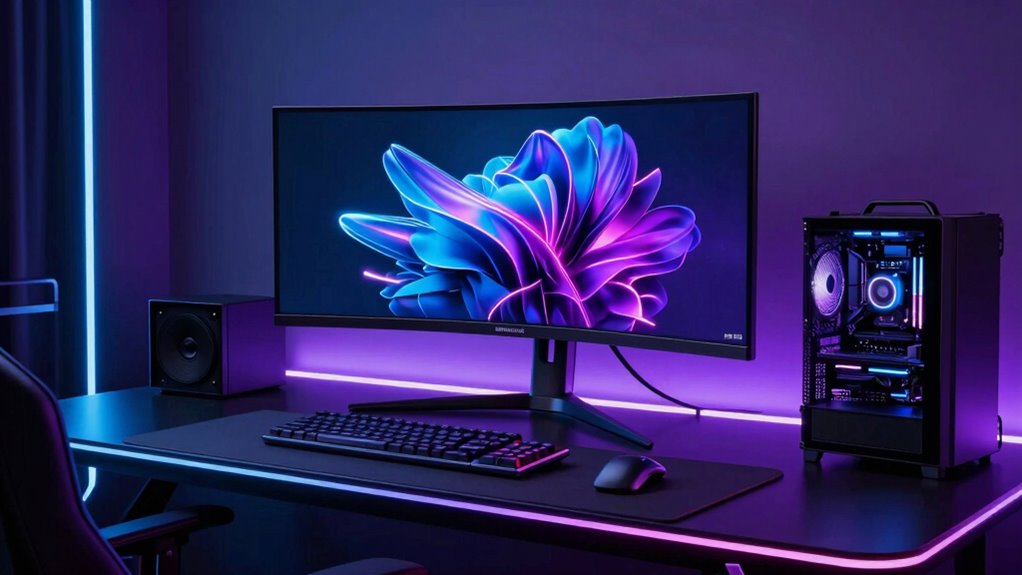
The Samsung Odyssey Neo G9 is a bold ultrawide flagship with a 32:9 panel and refined Mini LED backlighting. It delivers standout brightness and an immersive scope, but comes at a premium price, heavy weight, and higher power draw. Its performance benefits hinge on source quality and calibration, with strong G-Sync/FreeSync support and a 240 Hz refresh, yet occasional frame pacing quirks may appear. For a fuller picture, there’s more to consider beyond the headline specs.
Design and Build: Immersive Giant, Thoughtful Ergonomics
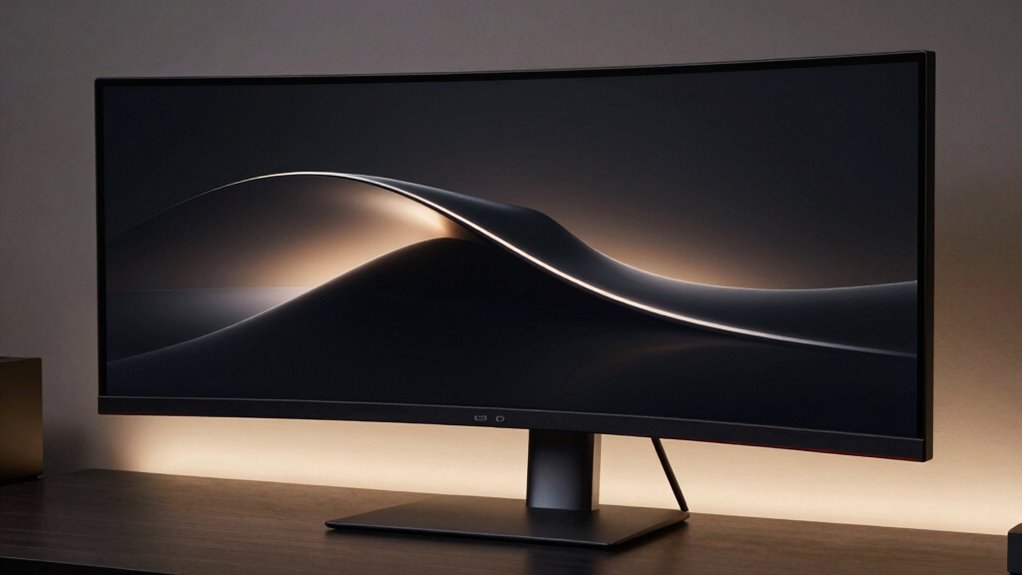
The Samsung Odyssey Neo G9 presents a commanding physical footprint that underscores its immersive promise, yet its size is a double-edged feature.
The design emphasizes a bold silhouette and premium finishes, but the bulk prompts questions about practicality and space compatibility.
Ergonomics are carefully considered: adjustable swivel, tilt, and height aim to optimize sightlines, while VESA compatibility supports flexible mounting.
The device’s packaging impact reflects a balance between protection and transport inefficiency, likely increasing initial footprint costs.
Design aesthetics project a high-end ethos, yet the form factor may deter routine placement in multi-use setups.
Display Technology: Mini LED, Quantum Matrix, and HDR Capabilities
Display technology centers on Samsung’s Mini LED implementation, Quantum Matrix illumination, and HDR capabilities that together aim to deliver high brightness, precise local dimming, and wide dynamic range. The mini led discussion frames how numerous dimming zones purportedly enhance contrast, yet uniformity and bloom remain potential drawbacks.
Quantum Matrix discussion analyzes granular lighting control and color fidelity, but real-world gains depend on source material and calibration. HDR capabilities claim HDR1000/2000 brightness, though peak values may be inconsistent.
Performance in Games: Refresh Rate, Response Time, G-Sync, and FreeSync

Could the Odyssey Neo G9 deliver truly seamless gameplay given its 240 Hz refresh rate and 1 ms GTG response time? In practice, motion remains subject to frame pacing and panel variance, tempering expectations of flawless fluidity.
G-Sync and FreeSync Premium Pro synchronize frame delivery, yet occasional micro-stutter can persist at lower frame counts, revealing frame-time inconsistencies.
Dual latency concerns arise between GPU rendering and display processing, especially under high-load scenes.
Adaptive brightness, while improving contrast, may introduce brightness shifts during rapid scene changes, subtly affecting perceived consistency.
Usability and Connectivity: Ports, Adjustability, and Comfort
This monitor’s usability hinges on tangible flexibility and accessible connectivity, with an emphasis on practical adjustability over nominal specs. The design supports swivel, tilt, height adjustment, and VESA mounting, but real-world ergonomics reveal mixed comfort results for long sessions.
Connectivity includes two USB ports and HDMI 2.1, yet cable routing remains underwhelming, producing noticeable clutter without deliberate cable management.
Usability quirks emerge in peripheral alignment and generic on-screen prompts, occasionally hindering quick setup.
Build quality favors solidity, though prudent users may still seek aftermarket solutions. In sum, adjustability is adequate, while comfort depends on desk geometry and disciplined cable management practices.
Final Verdict: Value, Use Cases, and Competitive Position
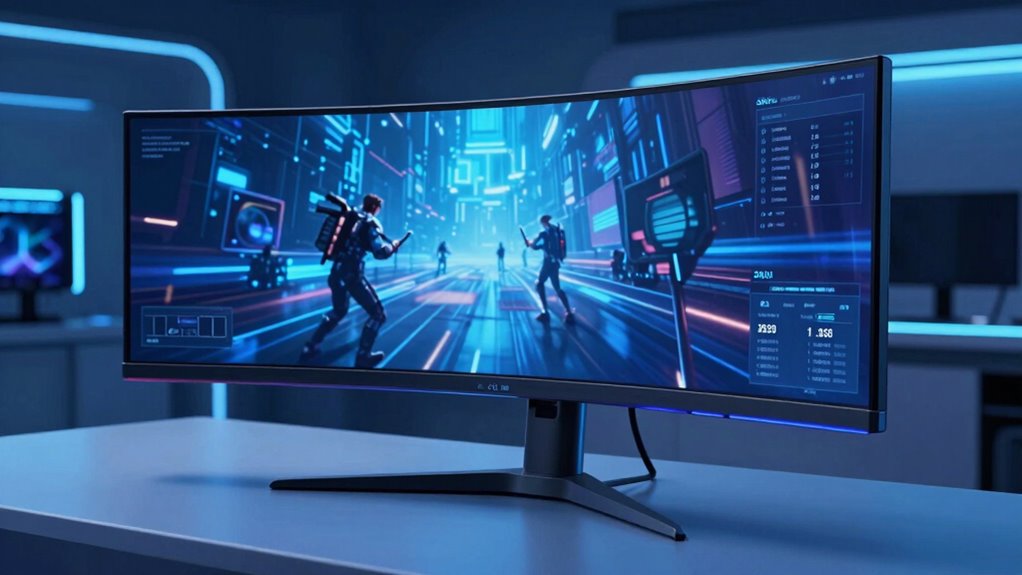
The Samsung Odyssey Neo G9 positions itself as a premium ultrawide gaming solution, but its value hinges on whether the enhanced brightness, extreme immersion, and 32:9 footprint justify the higher price and power draw.
The assessment centers on two word discussion ideas and value proposition, mapping concrete use cases: competitive esports, immersive single-player campaigns, and productivity multitasking.
Its strength lies in brightness, contrast, and broad field of view, yet drawbacks include cost, energy consumption, and display weight.
Competitively, it faces alternatives offering lower power, smaller footprint, or better integration with multi-monitor setups.
Conclusion
The Samsung Odyssey Neo G9 stands as a technically impressive ultrawide, trading breadth for incremental gains in brightness and contrast via Mini LED Quantum Matrix. Yet its oversized footprint, premium price, and niche appeal invite skepticism: benefits in competitive play are mitigated by extreme curvature and real-world usability concerns, while value hinges on the caller’s appetite for flagship HDR fidelity. In sum, a high-end showcase with limited broad appeal, best for enthusiasts rather than mass-market gamers.