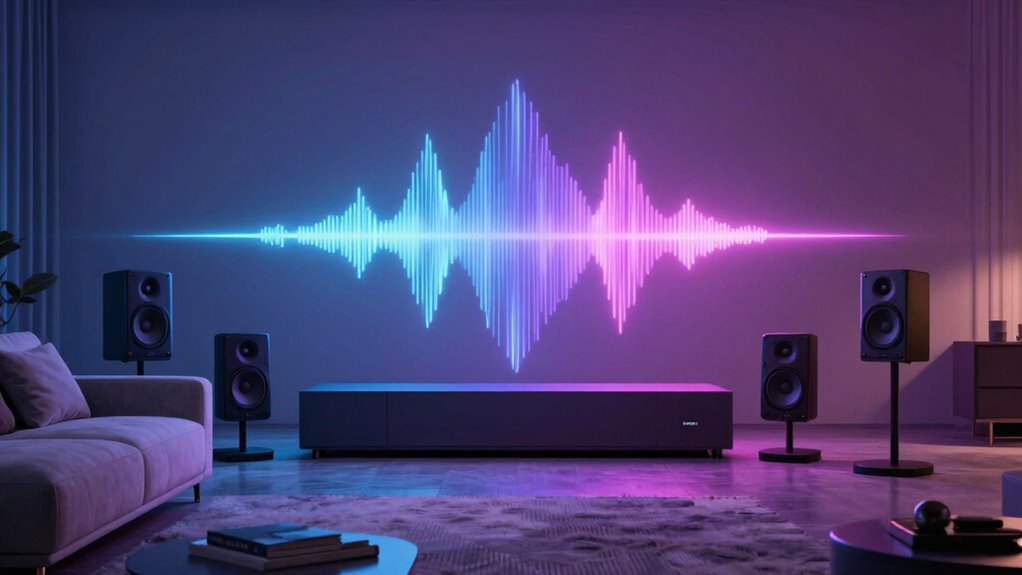
The Sony HT-A9 offers a compact, modular white design that emphasizes reliable integration over ornate styling. Its room-scale, 7.1.4 processing relies on software-driven spatial mapping to place drivers and create a convincing soundstage. Immersive Audio Enhancement broadens overall ambience, with coherent overhead and lateral wrapping. Setup benefits from wireless pairing and clear labeling, though initial enrollment can show sporadic connectivity. For deeper insights, the review continues to unpack how real-world performance aligns with the system’s precise localization and diffusion.
Design and Hardware Overview
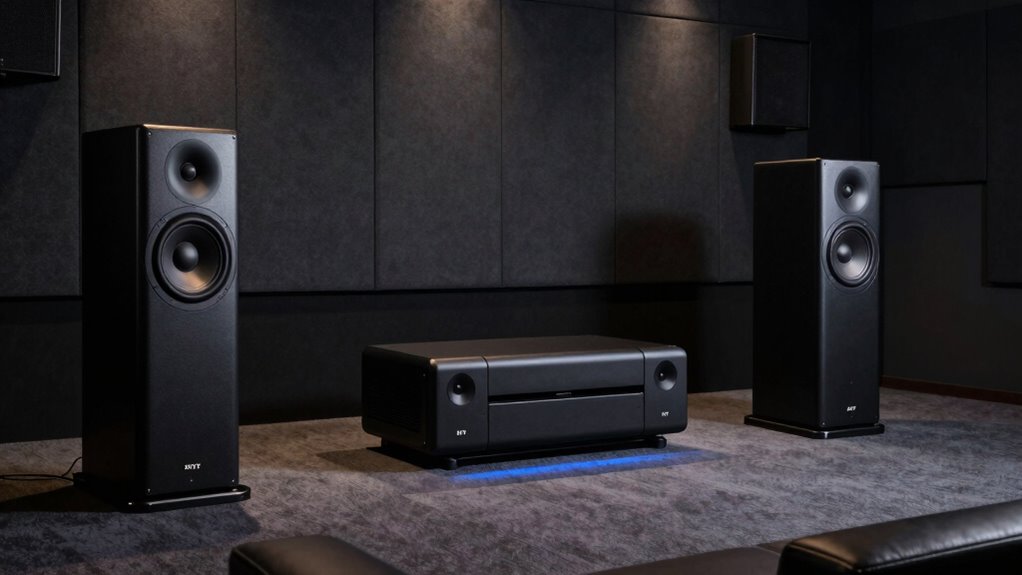
The Design and Hardware Overview presents a compact, modular system built to integrate into varied living spaces. The arrangement emphasizes scalable placement and discreet presentation, aligning with modern interiors. From a design overview perspective, the white enclosures maintain a minimalist silhouette while housing precision drivers and processing components.
Hardware details reveal a tactile, purpose-driven build, with each unit contributing to synchronized sound fields through calibrated software. Connectivity modules and mounting options underpin flexible layouts, supporting diverse room geometries. The emphasis remains on reliable integration rather than ornate styling, enabling focused evaluation of sound stage potential and system cohesion.
Real-World Audio Performance and Immersive Features
Real-world performance hinges on the HT-A9’s ability to translate software-encoded spatial cues into a coherent, room-scale soundstage; its 360 Spatial Sound Mapping system maps driver outputs to virtual positions, delivering immersive wraps that extend beyond traditional 7.1.4 layouts.
In practice, soundstage realism emerges from precise localization and balanced diffusion across seating zones, with the system maintaining coherence as effects pan overhead or wrap laterally.
Height channel perception remains credible, offering discernible vertical cues without obvious localization artifacts.
Immersive Audio Enhancement consistently enriches content, though at extreme dynamics some fine-grain detail can soften; overall, the array delivers persuasive, scalable surround realism.
Connectivity, Smart Features, and Setup Experience
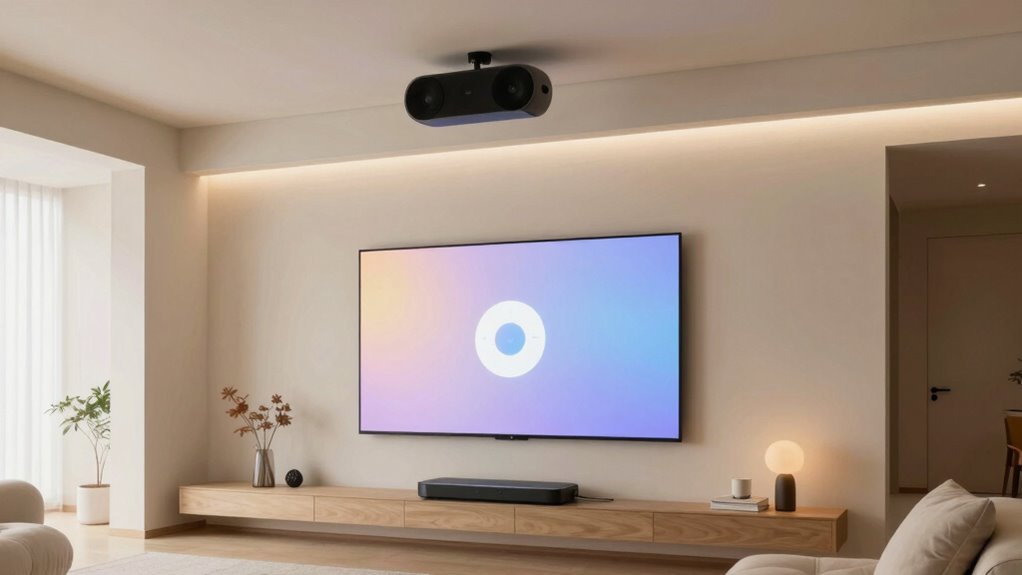
Connectivity and smart features define the HT-A9’s usability, delivering a seamless bridge between home theater and smart ecosystems. The setup relies on a responsive wireless framework, with Bluetooth, Wi-Fi, and Chromecast built-in enabling quick device registration. Voice control is supported via Google Assistant and Amazon Alexa, though on-device commands feel approximate rather than instantaneous. The unboxing experience reveals compact components and clear labeling, aiding initial orientation. Mobile app setup provides guided pairing, software updates, and system checks, yet some users report sporadic connectivity during initial enrollment. Overall, the ecosystem integration is robust, prioritizing accessibility and cross-platform compatibility over absolute marginal latency.
Conclusion
The Sony HT-A9 delivers a bold, technically ambitious take on immersive sound, turning room shapes into a flexible soundstage with 7.1.4 virtualization. Its WISA-like wireless setup, multiple calibration pathways, and the 360 Spatial Sound Mapping create a convincing enveloping field that outperforms conventional layouts in many scenarios. Yet the system remains processor- and space-intensive, with a nontrivial setup burden and ongoing calibration needs. Overall, it’s a forward-looking, capable centerpiece for serious home theaters and gaming.