
The TP-Link Archer AX10 offers a practical, budget-friendly Wi‑Fi 6 experience with a compact, understated chassis. Its 1.5 GHz tri-core processor supports OFDMA, MU-MIMO, and 1024-QAM, delivering stable throughput across typical households. Dual-band performance reaches up to 300 Mbps on 2.4 GHz and 1201 Mbps on 5 GHz, with beamforming enhancing reliability. Setup via TP-Link Tether is straightforward, and compatibility remains broad. If you want a reliable baseline for small homes, this model merits closer look.
Design and Hardware Overview
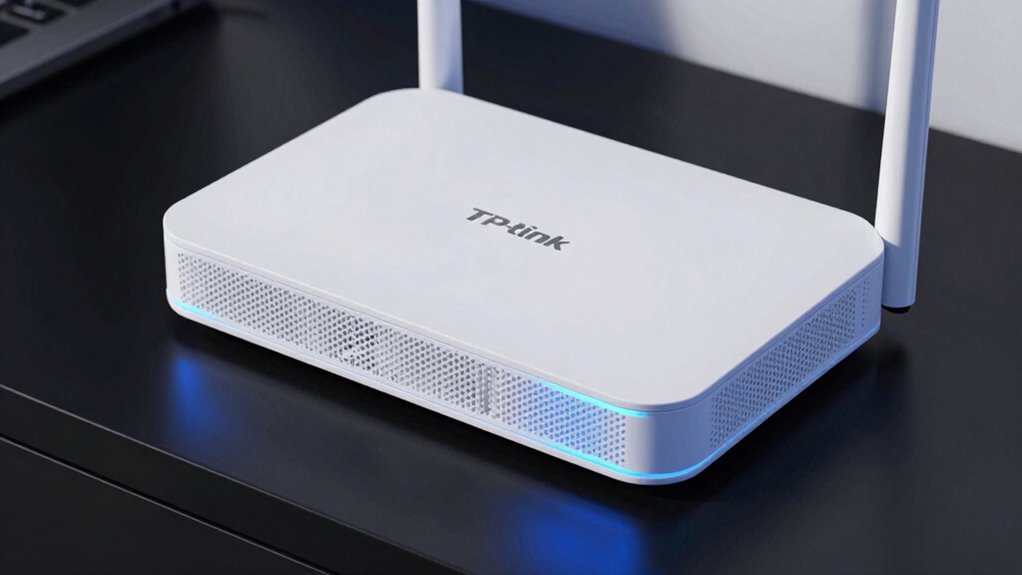
The TP-Link Archer AX10 presents a compact, understated form factor that emphasizes practicality over flair, aligning with its role as a budget-friendly WiFi 6 router.
The design overview reveals a simple, unobtrusive chassis with accessible ports and status indicators, prioritizing ease of placement and setup.
Hardware components are clearly enumerated: a 1.5 GHz tri-core processor, supporting OFDMA, MU-MIMO, and 1024-QAM, underpinning stable throughput.
The device focuses on reliable connectivity and energy efficiency, rather than spectacle.
Wireless Performance and Technology
Wireless performance on the Archer AX10 hinges on WiFi 6 services like OFDMA, MU-MIMO, and 1024-QAM, which collectively boost efficiency and throughput across multiple devices.
The design overview shows how these features translate into steadier multi-device operation, while hardware details reveal a 1.5 GHz tri-core processor that sustains smooth traffic and minimizes stalls.
With dual-band support, peak rates reach 300 Mbps on 2.4 GHz and 1201 Mbps on 5 GHz, enabling responsive links for everyday tasks.
The combination of beamforming and targeted transmission further strengthens connections, contributing to consistent performance within typical home layouts.
Coverage and Reliability in Real-World Use

Real-world use shows the Archer AX10 delivering notable consistency across typical home layouts, thanks to beamforming-focused signal targeting and WiFi 6 efficiencies. In practice, coverage remains stable from central hubs to distant rooms, though throughput can taper with multiple walls or interference sources. The router’s beamforming concentrates energy toward connected devices, improving reliability for simultaneous streams.
Design flaws appear marginal, mainly around antenna placement and potential over‑provisioning relative to smaller apartments. Price concerns emerge for renewed units versus newer models offering advanced features without notable lag. Overall, reliability is competitive, yet buyers should weigh durability and long-term value against competing AX models.
Setup, Compatibility, and Features
Setup, compatibility, and features are straightforward and well-integrated on the Archer AX10: the device supports backward compatibility with all previous 802.11 standards, enabling seamless connections for legacy devices while leveraging Wi‑Fi 6 efficiencies for newer gear. The setup process offers setup clarity via the TP-Link tether app, guiding users through quick configuration and security options. Compatibility caveats include potential minor performance variations with older clients on slower bands. Features emphasize OFDMA, MU‑MIMO, and beamforming, plus parental controls and Alexa compatibility. The architecture maintains a tri‑core processor for stable performance across connected devices.
Value, Pros, and Final Thoughts
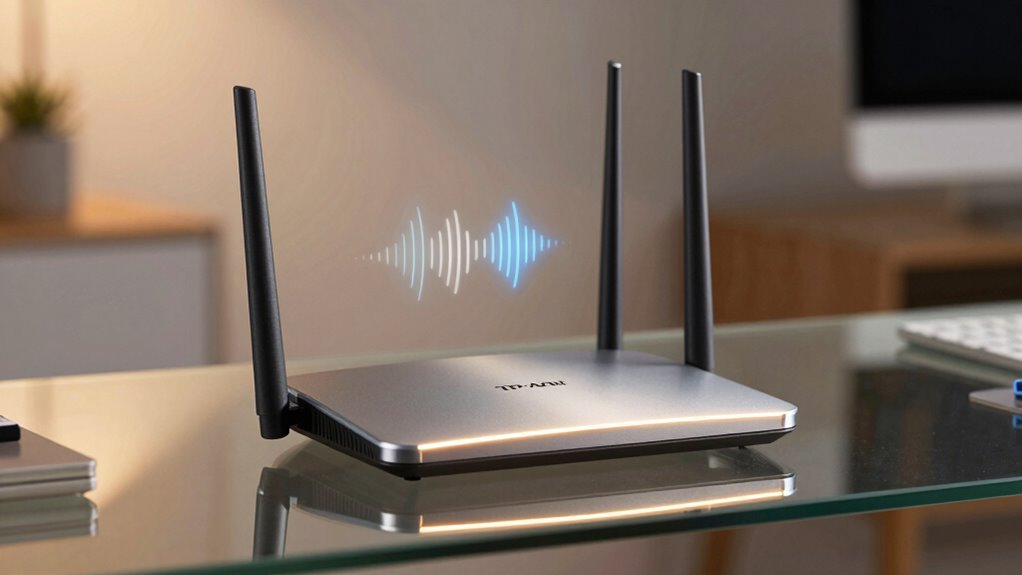
From the prior discussion of setup, compatibility, and features, the Archer AX10’s value proposition centers on delivering a Wi‑Fi 6 experience at a renewed price point without sacrificing core performance.
The router trades premium hardware polish for solid, dependable throughput suitable for small households and mixed-device environments.
Strengths include efficient OFDMA and MU‑MIMO support, stable beamforming, and broad compatibility, which translate into practical reliability rather than flashy metrics.
However, attention to an irrelevant topic or off topic critique could distract from core capabilities.
Conclusion
The Archer AX10 delivers solid Wi‑Fi 6 basics at a highly approachable price, making it a sensible upgrade for modest homes and budget-conscious users. Its core strengths—efficient 802.11ax tech, robust app setup, and practical features—translate to steadier performance for everyday devices without a chaotic interface. However, its compact hardware cap limits peak throughput and advanced features compared to pricier rivals. For many households, it’s a prudent entry into Wi‑Fi 6 rather than a high‑end upgrade.