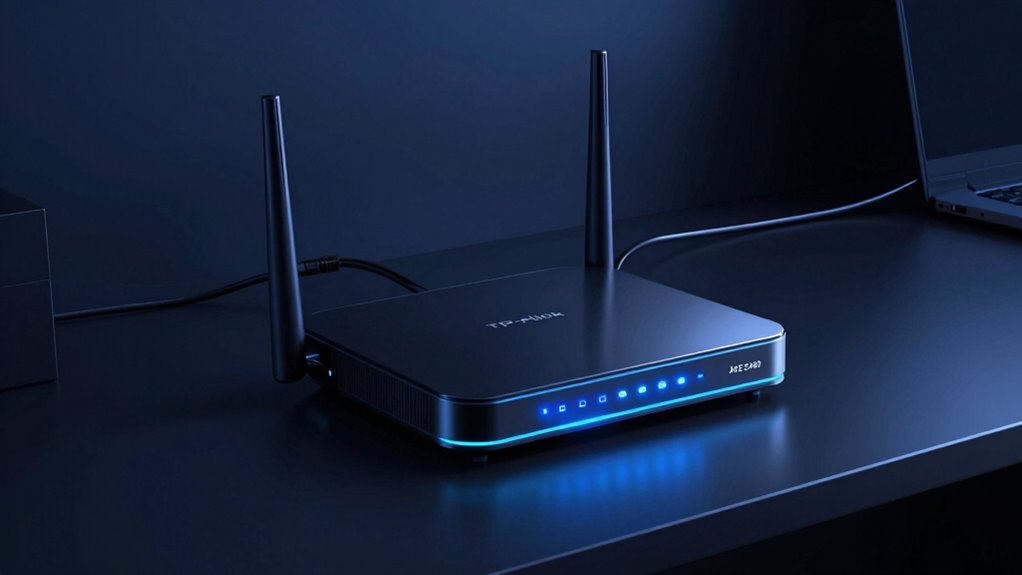
The TP-Link AXE5400 Archer AXE75 presents a compact, low-profile chassis with exposed side vents for passive cooling and a fingerprint-suppressing textured top. It delivers solid 6 GHz performance with elevated throughput and stable core efficiency, though real gains depend on client distance. Security is strong, featuring VPN options, WPA3, and TP-Link HomeShield, without sacrificing gaming latency. Setup is straightforward, with OneMesh readiness for expansion. In sum, it offers practical mesh and QoS capabilities with room to grow—more details follow.
Design and Hardware Overview
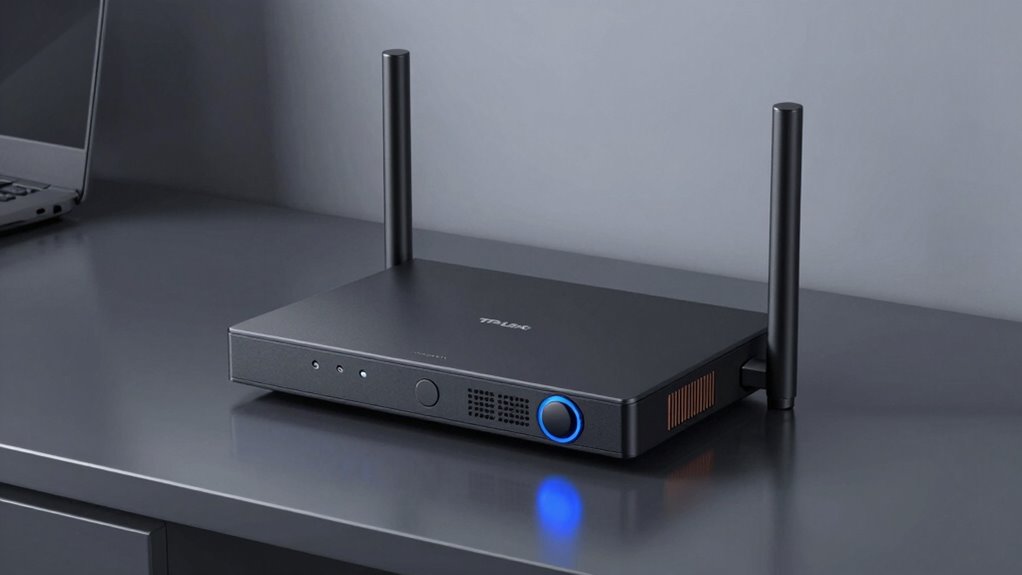
The TP-Link Archer AXE75 presents a compact, unobtrusive chassis that emphasizes practicality over flair, with exposed vents along the sides for passive cooling and a textured top surface that minimizes fingerprints. The form anchors a utilitarian design aesthetic aimed at steadiness rather than spectacle.
Internally, a 1.7 GHz quad-core CPU and 512 MB memory suggest adequate headroom for 6E features and multi-device handling. The hardware durability is reinforced by sturdy plastic housing and measured weight, while port layout favors straightforward access.
Performance on 6E: Speed, Core Power, and Latency
How does the AXE75 perform on the 6 GHz band, and what does that imply for speed, core power, and latency?
On 6E, the device shows elevated throughput with reduced interference, translating to strong speed benchmarks while maintaining stable core efficiency. The quad-core CPU handles concurrent tasks without noticeable throttling, preserving responsiveness under load. Latency remains competitive for gaming and real-time apps, aided by the broad bandwidth and efficient scheduling.
However, real-world gains depend on client capabilities and distance from the router. In sum, 6E delivers meaningful performance gains, with core efficiency sustaining sustained throughput.
Features and Security: VPN, WPA3, and TP-Link HomeShield
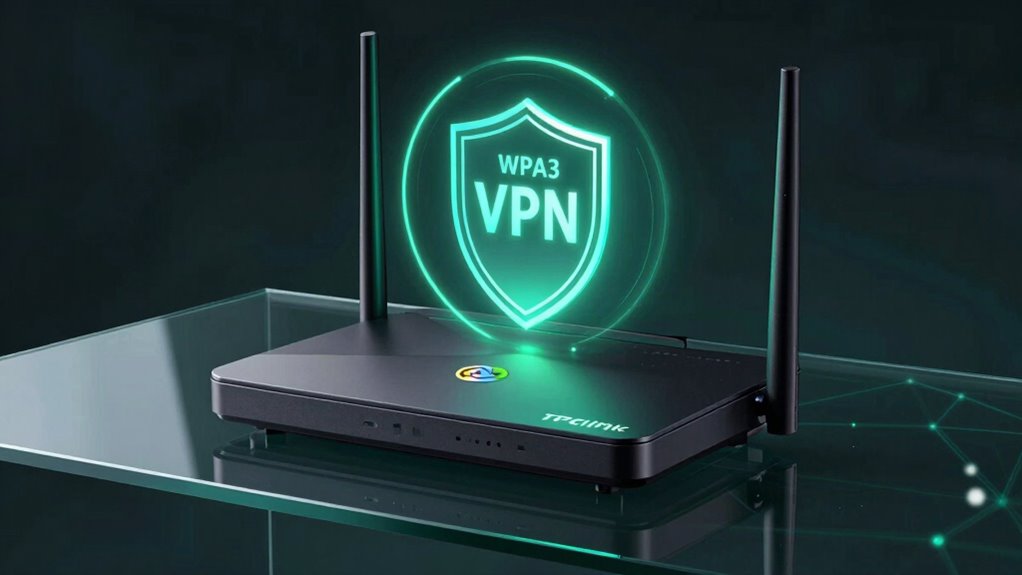
TP-Link’s AXE75 integrates a robust security stack that centers on VPN flexibility, WPA3 protection, and the company’s HomeShield service.
The design and hardware overview emphasizes integrated VPN features and standard encryption, while HomeShield offers network protection and IoT safeguards.
In real-world use, VPN features enable remote access with acceptable overhead, and WPA3 security strengthens credential resilience.
Performance on 6e: speed, core power, and latency remain solid for gaming and streaming when security is active.
Setup experience and compatibility are straightforward, though enterprise-like configurations may exceed casual needs.
Mesh integration, QoS, and parental controls illustrate practical TP-Link HomeShield benefits for households.
Setup Experience and Compatibility
Setting up the Archer AXE75 is straightforward and user-friendly, building on the security and media features discussed earlier. The setup experience emphasizes quick firmware checks, guided wizard steps, and clear status indicators, reducing ambiguity for non-technical users.
Compatibility notes highlight broad ISP support and the necessity of a modem for most providers, with OpenVPN/PPTP/L2TP options for VPN integration.
The device’s OneMesh readiness aids future expansion.
While the interface is clean, some advanced settings remain buried, requiring users to navigate menus carefully.
Real-World Use: Mesh, QoS, and Parental Controls

The Archer AXE75 demonstrates solid real-world utility through its mesh, QoS, and parental control features, delivering cohesive whole-home coverage with OneMesh and straightforward traffic management. In practice, mesh performance remains dependable across mid-sized homes, though edge-room connections can fluctuate during peak activity.
QoS offers concrete prioritization for gaming and streaming, providing noticeable latency relief when configured, while still allowing background tasks. Parental controls are accessible and sufficient for basic filtering and time limits, yet lack advanced scheduling depth.
Conclusion
The Archer AXE75 delivers solid tri-band performance with a notable edge on 6 GHz for capable devices, supported by a robust processor and ample memory that sustain steady gaming and streaming. Its features—VPN, WPA3, HomeShield, and OneMesh—offer practical security and coverage enhancements, though real-world gains hinge on compatible devices and extender placement. Setup is straightforward, and QoS/parental controls provide useful oversight. Overall, it’s a capable, mid-to-high-end option for homes craving reliable gigabit wireless with future-ready 6E benefits.